
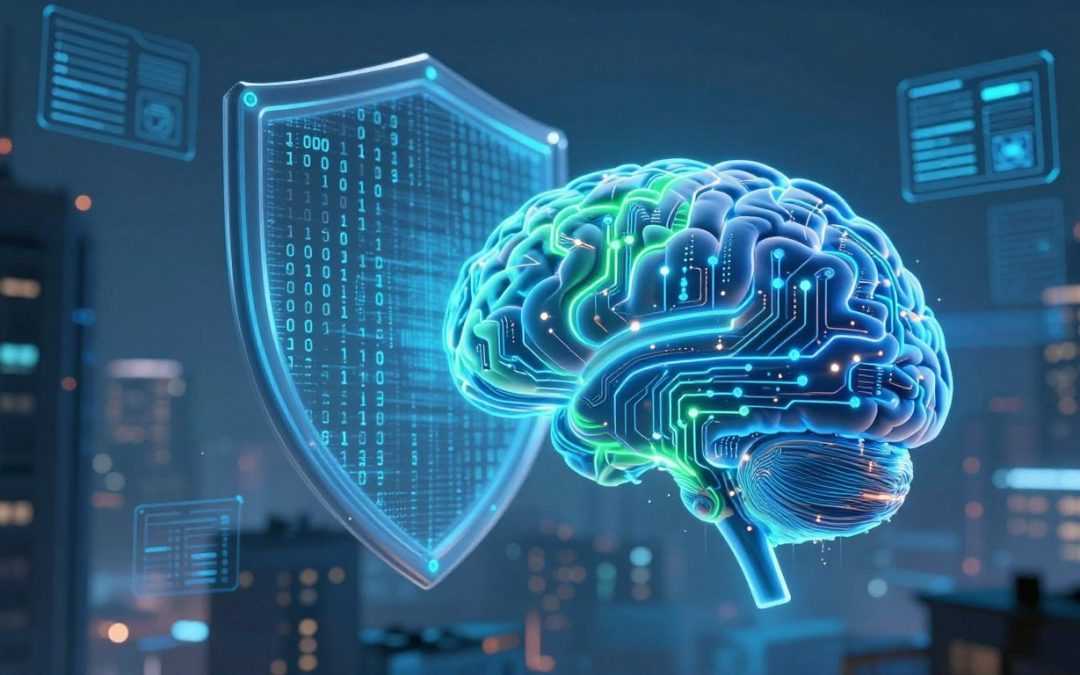
🤖 AI Is Transforming Cybersecurity — For Better and For Worse.Modern digital defense relies heavily on advanced machine learning models. These AI cybersecurity systems help companies identify threats before they cause significant damage. By automating complex tasks, businesses can protect sensitive information with greater speed than ever before.

Edit
Full screen
Delete
🤖 AI Is Transforming Cybersecurity — For Better and For Worse.
However, this innovation acts as a double-edged sword. While defenders use these tools to build stronger walls, malicious actors leverage the same technology to launch sophisticated attacks. Understanding this balance remains vital for any organization operating online today.
We must explore how these automated solutions change our approach to data safety. Staying ahead of evolving risks requires a deep look at both the advantages and the hidden dangers of modern software.
Key Takeaways
- Machine learning enhances threat detection speeds significantly.
- Automated defense systems reduce the burden on human analysts.
- Hackers utilize similar technology to bypass traditional security measures.
- Organizations must adopt a proactive stance to mitigate emerging digital risks.
- Balancing innovation with caution defines the future of data protection.
The Current Landscape of Digital Threats
Navigating the current environment of digital threats requires a clear understanding of how attackers operate today. Businesses across the United States are facing a surge in malicious activity that targets both small enterprises and large corporations alike. As these risks grow, the need for proactive security measures has never been more urgent.
The Escalation of Sophisticated Ransomware
Modern cybercriminals have moved far beyond simple, broad-spectrum attacks. They now utilize highly automated tools to identify weaknesses in corporate networks with surgical precision. This shift has made effective ransomware protection a top priority for IT departments everywhere.
Attackers often spend weeks performing reconnaissance before launching their payload. By the time a breach is detected, the damage is frequently already done. Speed and stealth are the hallmarks of these new, sophisticated campaigns.
Why Traditional Signature-Based Detection Is Failing
For years, security teams relied on signature-based detection to identify known threats. This method works by comparing files against a database of known malware “fingerprints.” Unfortunately, this approach is struggling to keep pace with the rapid evolution of digital threats.
Today’s attackers frequently use polymorphic malware, which changes its code structure to evade detection. Because the file looks different every time it replicates, static signatures simply cannot catch it. This reality forces organizations to rethink their ransomware protection strategies entirely.
Relying solely on legacy tools leaves a massive gap in your defense perimeter. To stay safe, companies must adopt behavioral analysis and machine learning to spot anomalies that signatures miss. Adaptability is now the most critical component of a robust security posture.
How AI Is Transforming Cybersecurity — For Better and For Worse.
As we integrate more advanced tools into our systems, we must acknowledge that these same innovations are available to those who wish to do us harm. The rapid evolution of AI cybersecurity is a double-edged sword that creates both incredible opportunities and significant new risks for organizations worldwide.
Edit
Delete
The Dual-Use Nature of Artificial Intelligence
The core challenge of modern technology lies in its inherent dual-use nature. The very algorithms designed to detect anomalies in network traffic can be repurposed by attackers to identify vulnerabilities in real-time. This means that the same AI cybersecurity frameworks used to protect sensitive data are often studied by hackers to bypass traditional security measures.
When a security vendor releases a new automated patch or detection model, malicious actors often reverse-engineer these systems. They look for gaps in the logic to craft more effective payloads. This cycle creates a constant game of cat and mouse where the advantage shifts based on who can innovate faster.
Shifting the Balance of Power in Digital Warfare
Digital warfare is no longer just about human skill; it is about the computational power behind the defense. As defenders leverage machine learning to automate threat hunting, attackers are using similar models to automate their reconnaissance and social engineering efforts. This shift forces organizations to rethink their reliance on static defenses.
The balance of power is currently in a state of flux as both sides race to adopt more sophisticated algorithms. Success in this environment requires more than just buying the latest software. It demands a strategic approach to AI cybersecurity that anticipates how an adversary might weaponize the very tools meant to keep them out.
Ultimately, the organizations that thrive will be those that view these technologies as a collaborative partner rather than a silver bullet. By staying ahead of the curve, security teams can turn the tide in this ongoing digital conflict.
The Defensive Power of Machine Learning
Machine learning is no longer just a buzzword; it is the backbone of modern, proactive defense strategies. By moving beyond static rules, organizations can now identify complex patterns that human analysts might miss. This shift allows security teams to stay ahead of sophisticated adversaries in an increasingly hostile digital environment.
Predictive Analytics for Threat Hunting
Predictive analytics serves as a force multiplier for security operations centers. By analyzing vast datasets, these systems can flag anomalies that deviate from established baselines. This capability is essential for effective threat hunting, as it allows teams to isolate potential risks before they escalate into full-scale breaches.
When security tools learn from historical data, they become better at predicting future attack vectors. This proactive stance ensures that your machine learning security posture remains resilient against evolving tactics. Instead of waiting for an alert, analysts can hunt for hidden threats with greater precision.
Automated Incident Response and Remediation
Speed is the most critical factor when a security incident occurs. Automated incident response platforms can execute pre-defined playbooks the moment a threat is confirmed. This removes the delay caused by manual intervention, allowing for immediate containment of compromised endpoints.
By automating routine remediation tasks, security professionals can focus their energy on high-level strategy. These systems can isolate infected devices, block malicious IP addresses, and reset credentials in seconds. This efficiency is vital for maintaining business continuity during an active attack.
Reducing Mean Time to Detect (MTTD)
The primary goal of these advanced technologies is to lower the Mean Time to Detect (MTTD). A shorter detection window directly correlates to lower recovery costs and reduced data loss. By catching threats early, organizations can effectively minimize the impact of a potential breach.
| Feature | Traditional Security | AI-Driven Security |
| Detection Speed | Slow (Manual) | Near Real-Time |
| Threat Identification | Signature-Based | Behavioral Analysis |
| Response Time | Delayed | Automated |
| Scalability | Limited | High |
The Dark Side: AI-Powered Cyberattacks
While artificial intelligence offers powerful defensive tools, it also provides a sophisticated toolkit for modern cybercriminals. These bad actors are constantly evolving their methods to bypass traditional security barriers. Understanding these digital threats is the first step toward building a resilient defense strategy.

Edit
Full screen
Delete
AI vulnerability scanning
Automated Phishing and Social Engineering
Traditional phishing often relied on generic templates that were easy to spot. Today, attackers use generative models to craft highly personalized messages that mimic the tone and style of trusted colleagues. This shift makes phishing prevention significantly more difficult for standard email filters.
By automating the creation of these messages, criminals can launch thousands of unique attacks simultaneously. This scale allows them to target specific departments or individuals with surgical precision. Organizations must now adopt advanced behavioral analysis to detect these subtle anomalies.
AI-Driven Vulnerability Scanning and Exploitation
Attackers are now using AI vulnerability scanning to map corporate networks faster than ever before. Instead of manual reconnaissance, these tools automatically identify unpatched software and misconfigured cloud buckets. Once a weakness is found, the system can immediately suggest or execute an exploit.
This speed leaves security teams with very little time to react. By the time a patch is released, the vulnerability may have already been probed by multiple automated bots. Proactive patching and continuous monitoring are no longer optional; they are essential for survival.
The Rise of Deepfake Technology in Business Email Compromise
Business Email Compromise (BEC) has reached a new level of danger with the integration of deepfake technology. Attackers can now synthesize the voice or likeness of a CEO to authorize fraudulent wire transfers. This makes deepfake detection a critical priority for financial and executive teams.
Employees must be trained to verify high-stakes requests through secondary, out-of-band communication channels. Relying solely on digital correspondence is a major risk in the current landscape. Awareness is the best defense against these highly deceptive tactics.
| Threat Type | Traditional Method | AI-Powered Method |
| Phishing | Generic, mass-mailed | Personalized, context-aware |
| Scanning | Manual, slow discovery | Automated, real-time |
| BEC | Text-based impersonation | Audio/Video deepfakes |
Real-World Examples of AI in Security Operations
Seeing how AI functions in real-world environments reveals the true power of modern defense systems. Organizations today face a barrage of sophisticated attacks that require more than just static rules to stop. By integrating advanced intelligence into security operations, companies can shift from a reactive stance to a proactive posture.
CrowdStrike Falcon and Behavioral Analysis
CrowdStrike Falcon stands out by utilizing behavioral analysis to identify malicious patterns rather than relying on known file signatures. This approach allows the platform to detect “fileless” attacks that often bypass traditional antivirus software. By monitoring process execution in real-time, it flags suspicious activity that deviates from established user or system norms.
Darktrace and Self-Learning Immune Systems
Darktrace takes a unique approach by modeling the “pattern of life” for every device and user on a network. Its self-learning immune system does not require prior knowledge of specific threats to be effective. Instead, it automatically detects anomalies that indicate a potential breach, allowing for rapid intervention before data exfiltration occurs.
SentinelOne and Autonomous Endpoint Protection
SentinelOne provides autonomous endpoint protection that operates without the need for constant cloud connectivity. The platform uses machine learning models to predict and block threats at the point of impact. This autonomous capability ensures that endpoints remain secure even when they are disconnected from the corporate network.
| Platform | Primary Focus | Key Advantage |
| CrowdStrike | Behavioral analysis | Cloud-native speed |
| Darktrace | Immune system modeling | Self-learning detection |
| SentinelOne | Autonomous endpoints | Offline protection |
The Ethical Dilemmas of Automated Defense
While automation speeds up defense, it forces us to ask difficult questions about fairness and accountability. As organizations adopt these powerful tools, AI ethics must become a core component of the security strategy. Relying on software to make split-second decisions requires a deep understanding of how these systems function and who they might impact.
Algorithmic Bias in Security Decision Making
Security systems are only as good as the data used to train them. If the underlying datasets contain historical biases, the software may inadvertently flag specific groups or behaviors unfairly. This algorithmic bias can lead to false positives that disrupt legitimate operations or, worse, ignore genuine threats from unexpected sources.
Developers must prioritize diversity in training data to mitigate these risks. Without constant oversight, automated tools might perpetuate existing prejudices rather than providing objective protection. Fairness in security is not just a technical goal; it is a fundamental requirement for maintaining trust.
The Challenge of Explainable AI (XAI)
Many modern security tools operate as “black boxes,” making it difficult for human analysts to understand why a specific decision was reached. This lack of transparency creates a significant hurdle for incident response teams. Implementing explainable AI is essential to ensure that security professionals can audit and trust the actions taken by their autonomous systems.
When a system blocks a user or isolates a device, the security team needs to know exactly why. Explainable AI allows for better troubleshooting and faster resolution of errors. By shedding light on the decision-making process, organizations can maintain control while benefiting from machine speed.
Balancing Privacy and Security in Monitoring
Robust security often requires deep visibility into network traffic and user behavior. However, this level of monitoring can easily cross the line into invasive surveillance. Organizations must find a delicate balance that protects the network without compromising individual privacy rights.
Transparency is the key to navigating this tension. Users should be informed about what data is collected and how it is used to keep the environment safe. By adhering to strong AI ethics, companies can build a secure infrastructure that respects the privacy of every individual within the organization.
Preparing Your Organization for an AI-Driven Future
The shift toward artificial intelligence in security operations demands a proactive and structured approach. Organizations that wait for threats to emerge before adapting often find themselves at a significant disadvantage. By planning ahead, you can turn potential risks into strategic advantages.
Developing an AI-Ready Security Strategy
A successful transition begins with a comprehensive audit of your current infrastructure. You must identify which processes can benefit from automation and where human oversight remains absolutely critical. This assessment ensures that your technology stack aligns with your long-term security goals.
“The best way to predict the future is to create it.”
— Peter Drucker
Upskilling Security Teams for AI Integration
Technology is only as effective as the people managing it. Your security analysts need specialized training to interpret AI-generated insights and manage automated workflows. Continuous learning is essential to keep your team ahead of evolving digital threats.
Encouraging a culture of collaboration between human experts and machine learning models will improve your response times. When your staff understands how to leverage these tools, they can focus on high-level strategy rather than repetitive tasks. This synergy is the key to a truly resilient defense.
Establishing Governance for AI Tools
Implementing new technology requires a robust framework to maintain operational safety. Effective security governance ensures that all AI tools are deployed in compliance with industry standards and internal policies. Without clear oversight, even the most advanced systems can introduce unforeseen vulnerabilities.
Regular audits and strict access controls are vital components of your security governance model. By setting clear boundaries, you protect your organization from potential misuse and ensure that your AI investments remain secure. Consistency in these practices will build long-term trust and stability.
Essential Tools and Technologies to Watch
Staying ahead of modern threats requires a deep understanding of the latest AI-driven security tools. As digital environments grow more complex, security teams must adopt innovative solutions to maintain a robust defense. These technologies are not just optional upgrades; they are becoming fundamental components of a resilient infrastructure.

Edit
Full screen
Delete
AI-driven security
Generative AI for Security Policy Drafting
Drafting comprehensive security policies is often a time-consuming task that requires significant manual effort. Generative AI is changing this by allowing teams to create structured, compliant, and tailored policy documents in seconds. By inputting specific organizational requirements, these tools generate drafts that align with industry standards like NIST or ISO.
This automation allows security professionals to focus on strategic decision-making rather than administrative paperwork. It ensures that policies remain up-to-date with the latest regulatory changes. Consequently, organizations can maintain a higher level of compliance with much less friction.
Large Language Models for Log Analysis
Modern networks generate massive amounts of data, making it nearly impossible for humans to monitor every event manually. Large Language Models (LLMs) excel at parsing these logs to identify anomalies that might indicate a breach. By leveraging AI-driven security, these models can correlate disparate events across the entire enterprise network.
The ability to summarize complex log data into actionable insights is a game-changer for incident response. Instead of sifting through thousands of lines of code, analysts receive clear, natural language summaries of potential threats. This drastic reduction in noise allows teams to respond to genuine incidents with unprecedented speed.
The Role of SOAR Platforms in AI Orchestration
Security Orchestration, Automation, and Response (SOAR) platforms act as the central nervous system for modern security operations. When integrated with advanced intelligence, these platforms automate the entire lifecycle of a threat response. They ensure that AI-driven security tools work in harmony rather than in silos.
By orchestrating workflows, SOAR platforms can automatically isolate infected endpoints or block malicious IP addresses without human intervention. This level of automation is essential for mitigating the impact of fast-moving cyberattacks. The following table highlights how these technologies compare in their primary functions.
| Technology | Primary Function | Key Benefit |
| Generative AI | Policy Creation | Operational Efficiency |
| LLMs | Log Analysis | Threat Detection |
| SOAR Platforms | Orchestration | Automated Response |
The Future of Human-AI Collaboration in Security
The future of cybersecurity relies on a powerful partnership between human intuition and machine speed. As digital threats grow more complex, AI-driven security serves as a vital force multiplier for modern teams. By working together, humans and machines create a defense that is far more resilient than either could achieve alone.
Augmenting Human Expertise with Machine Speed
Machines excel at processing massive datasets in milliseconds, identifying patterns that would take a human analyst weeks to uncover. This unmatched speed allows security teams to respond to threats before they escalate into full-scale breaches. When we integrate AI-driven security tools, we free up our experts to focus on high-level strategy rather than repetitive log monitoring.
Human intuition remains essential for understanding the context behind a potential attack. While a machine can flag an anomaly, a human analyst determines if that action represents a genuine threat or a benign system update. This collaboration ensures that security operations remain both fast and accurate.
The Critical Need for Human Oversight
Even the most advanced systems require constant human oversight to remain effective. Automated tools can sometimes produce false positives or drift away from organizational goals if left entirely unchecked. Maintaining a human-in-the-loop approach ensures that every automated action aligns with ethical standards and business objectives.
Security leaders must prioritize training to ensure their teams can effectively manage these new technologies. By keeping humans at the helm, organizations can leverage AI-driven security while mitigating the risks of algorithmic bias. This balanced approach is the key to long-term digital safety.
| Feature | Human Role | AI Role |
| Data Processing | Contextual Analysis | High-Speed Scanning |
| Decision Making | Ethical Judgment | Pattern Recognition |
| Threat Hunting | Strategic Planning | Automated Detection |
| System Oversight | Policy Alignment | Continuous Monitoring |
Conclusion
Artificial intelligence reshapes the cybersecurity landscape by offering both powerful defensive shields and sophisticated attack vectors. Organizations now stand at a crossroads where technology dictates the pace of digital safety.
Success requires a balanced strategy that prioritizes ethical governance alongside technical innovation. Leaders must view machine learning as a partner rather than a replacement for human judgment. This synergy creates a resilient environment capable of adapting to evolving threats.
Building a secure future demands constant vigilance and a commitment to upskilling teams. Your organization can thrive by fostering a culture that values human oversight in every automated process. Start evaluating your current security posture today to ensure your defenses remain robust against tomorrow’s challenges.
Engage with your security operations center to identify gaps in your current AI integration. Share your experiences with these tools to help build a stronger community of defenders. Your proactive choices today define the safety of our shared digital world.
FAQ
How is artificial intelligence changing the way organizations approach data protection?
AI is acting as a dual-edged sword. While it empowers defenders to process massive amounts of data and identify threats at machine speed, it also gives malicious actors the ability to launch more sophisticated attacks. Organizations are now moving toward machine learning security to keep pace with the rapidly evolving digital landscape.
Why is traditional signature-based detection failing to stop modern cyber threats?
Signature-based detection relies on a database of known “fingerprints” for malware. However, today’s attackers use polymorphic malware that changes its code with every execution. To combat this, platforms like CrowdStrike Falcon use behavioral analysis to identify suspicious activity based on patterns rather than just known file names.
What is MTTD and why is it a critical metric for security teams?
Mean Time to Detect (MTTD) measures the average time it takes for a security team to become aware of a potential breach. By leveraging predictive analytics and automated incident response, companies can significantly lower their MTTD, stopping an intrusion before it turns into a catastrophic data breach.
How are attackers using AI to improve the success rates of phishing campaigns?
Malicious actors use automated phishing tools to craft highly personalized and convincing messages at scale. Furthermore, the rise of deepfake technology has led to more advanced Business Email Compromise (BEC) attacks, where attackers can impersonate an executive’s voice or likeness to trick employees into transferring funds.
What makes “self-learning” security systems like Darktrace different from older tools?
Unlike static tools, Darktrace employs a self-learning immune system that understands the “pattern of life” for every user and device in a network. This allows the system to detect subtle anomalies in real-time without needing pre-defined rules, providing a more proactive defense against “zero-day” exploits.
What is the role of SOAR platforms in a modern security operations center?
Security Orchestration, Automation, and Response (SOAR) platforms serve as the glue for an organization’s security stack. They are essential for AI orchestration, allowing different tools to work together to automate complex workflows, such as log analysis and rapid remediation, without constant human intervention.
Why is Explainable AI (XAI) important for ethical cybersecurity?
Explainable AI (XAI) is vital because it ensures that the “black box” of machine learning is transparent. For security teams to trust an automated decision, they need to understand the reasoning behind it. This helps mitigate algorithmic bias and ensures that the balance between monitoring and privacy is maintained.
How can my organization prepare for the future of human-AI collaboration?
Preparing for an AI-driven future requires a focus on upskilling security teams so they can manage and interpret AI-generated insights. While tools like SentinelOne offer autonomous endpoint protection, human oversight remains the most critical component for high-level strategy and ethical governance.
Can Generative AI and Large Language Models actually help with security tasks?
Absolutely! Generative AI is currently being used for efficient security policy drafting, while Large Language Models (LLMs) are transforming how analysts perform log analysis. These tools help human experts sort through noise faster, allowing them to focus on high-priority threat hunting.