
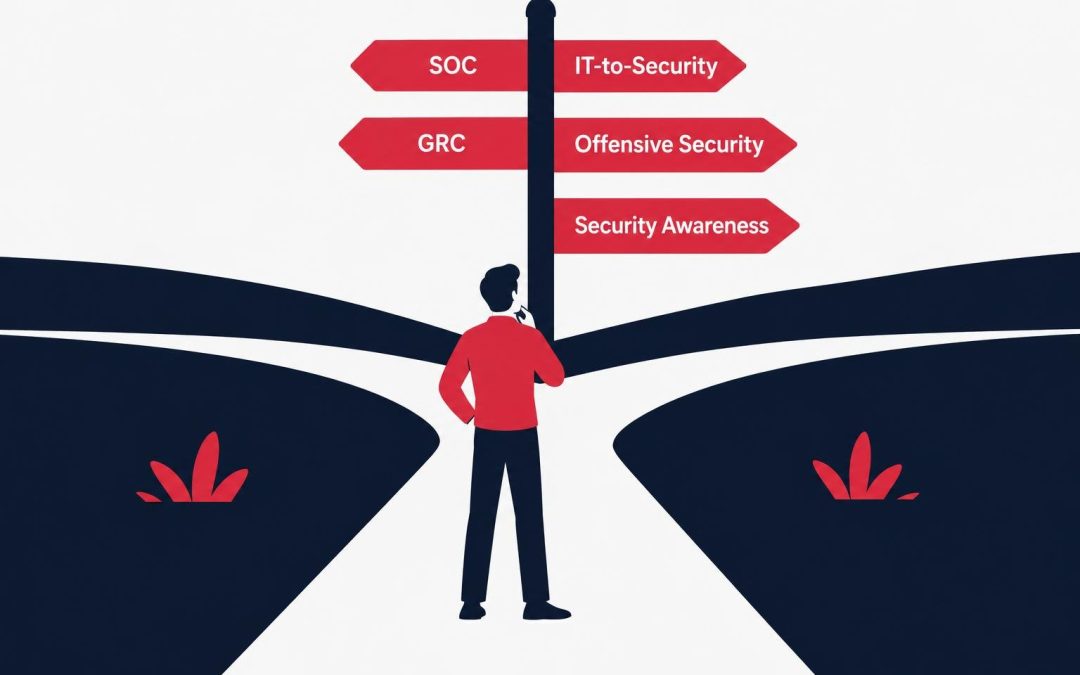
If you’re trying to get into cybersecurity, the hardest part isn’t learning the material. It’s figuring out which door to walk through first. The field has dozens of job titles, and most job postings assume you already know which one you want. This guide breaks down the main entry-level cybersecurity career paths for beginners, what they actually involve day to day, and how to tell which one fits your background and interests.
Why "Cybersecurity" Isn’t One Job
Cybersecurity is a collection of specialties that share a common goal: protecting systems, data, and people from harm. But the daily work of a penetration tester looks nothing like the daily work of a compliance analyst. Before you pick certifications or build a study plan, pick a lane. Trying to prepare for "cybersecurity in general" leads to scattered effort and a resume that doesn’t tell a clear story.
Below are five common entry points. Almost everyone who works in security today started in one of these.
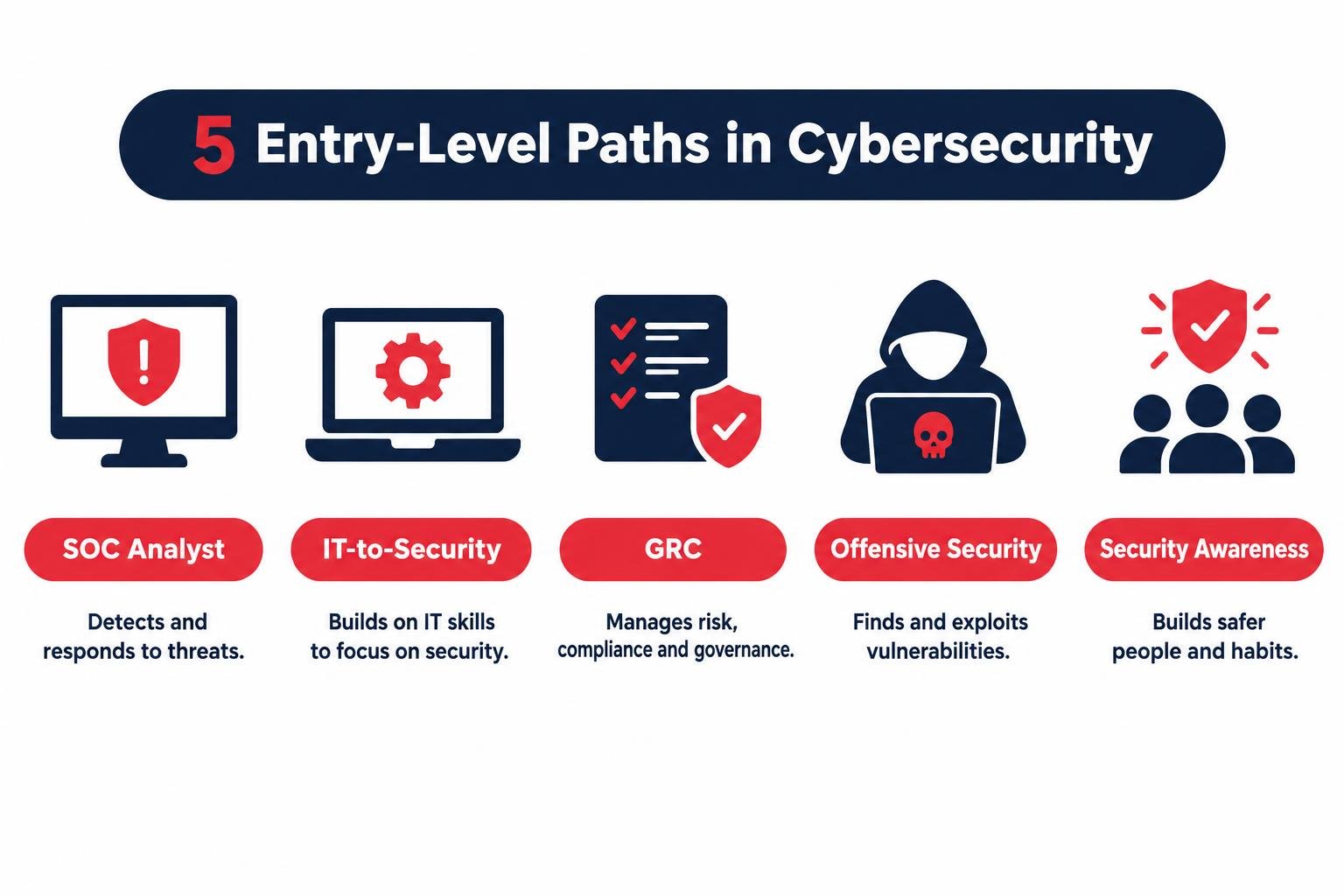
Path 1: Security Operations (SOC Analyst)
What it is
SOC analysts monitor alerts from security tools (SIEM, EDR, firewalls), investigate suspicious activity, and escalate real threats. It’s the most common first job in security because it’s the highest-volume hiring category.
A typical day
Triage a queue of alerts, decide which are false positives, write up findings on the ones that aren’t, and follow an escalation procedure (playbook) when something looks like a real incident.
Good fit if you
Like structured, procedural work; can stay calm and methodical when things are ambiguous; enjoy pattern recognition; don’t mind shift work (many SOCs run 24/7).
Core skills to build
Networking fundamentals (TCP/IP, DNS, HTTP), Windows and Linux basics, log analysis, one SIEM tool (Splunk or Microsoft Sentinel are widely used), and basic scripting (Python or PowerShell) to automate repetitive checks.
Realistic first certification
CompTIA Security+ is the most commonly requested baseline credential for SOC roles. It won’t make you job-ready by itself, but it signals you know the vocabulary and fundamentals.
Path 2: IT/Systems Foundation → Security
What it is
Not a security job per se, but the most reliable route into one. Many hiring managers prefer candidates who spent a year or two in help desk, sysadmin, or network admin roles before moving into security, because they already understand how the systems they’ll be defending actually work.
A typical day (before the move)
Managing user accounts, patching systems, troubleshooting network issues, maintaining backups.
Good fit if you
Are early in your career, don’t have a security job yet but can get an IT job, and are willing to spend 1-2 years building fundamentals before specializing.
Core skills to build
Active Directory, Windows Server, basic Linux administration, networking, ticketing systems.
Why this path works: Security tools generate false positives and blind spots constantly. Analysts who’ve administered real systems know what "normal" looks like, which makes them faster and more accurate at spotting what’s actually abnormal.
Path 3: Governance, Risk, and Compliance (GRC)
What it is
GRC professionals help organizations meet regulatory and framework requirements (ISO 27001, NIST, PCI DSS, SOC 2, local data protection laws), manage risk registers, run vendor security assessments, and prepare for audits.
A typical day
Reviewing policies against a control framework, interviewing system owners about how a control is implemented, documenting evidence for an auditor, tracking remediation of gaps.
Good fit if you
Are strong at writing and organization, enjoy structured frameworks more than technical troubleshooting, have a background in business, law, audit, or project management, and are comfortable talking to non-technical stakeholders.
Core skills to build
Familiarity with at least one major framework (ISO 27001 or NIST CSF are good starting points), risk assessment basics, and plain-language documentation skills.
Realistic first certification
ISO 27001 Foundation or a GRC-focused certificate. Save the harder credentials (like CISA or CRISC) for after you have some hands-on exposure, since both require or strongly reward real work experience.
Note: This path is often underrated by people who assume security means hacking. In reality, GRC hires are in constant demand, especially in regulated industries and regions with active data protection enforcement.
Path 4: Offensive Security (Junior Pentester / Vulnerability Analyst)
What it is
Finding weaknesses before attackers do — running vulnerability scans, testing applications, and (at more senior levels) simulating attacks.
A typical day at entry level
Running and triaging vulnerability scanner output, verifying findings aren’t false positives, writing clear remediation reports, and gradually taking on small manual testing tasks under supervision.
Good fit if you
Enjoy puzzles and breaking things to understand them, are comfortable with a lot of self-directed learning, and can write clearly (report writing is a bigger part of this job than most beginners expect).
Core skills to build
Web application basics (OWASP Top 10 concepts), Linux command line, scripting, and hands-on practice in legal lab environments.
Reality check: This is the most competitive entry path because it’s the one most beginners want. It usually requires a visible portfolio (write-ups of practice labs, CTF participation, a home lab) to stand out, since there are far more applicants than open junior roles.
Path 5: Security Awareness / Communications
What it is
Running phishing simulation programs, building training content, and helping non-technical staff understand security risks.
Good fit if you
Come from a training, communications, HR, or marketing background and want a security-adjacent role that uses those skills directly.
Core skills to build
Basic security literacy, instructional design, and metrics reporting (click rates, training completion).
Why it’s worth considering: It’s less crowded than technical entry paths and gives you a legitimate foothold in a security team, from which you can later move toward GRC or SOC work if you want.
How to Choose the Right Cybersecurity Career Path
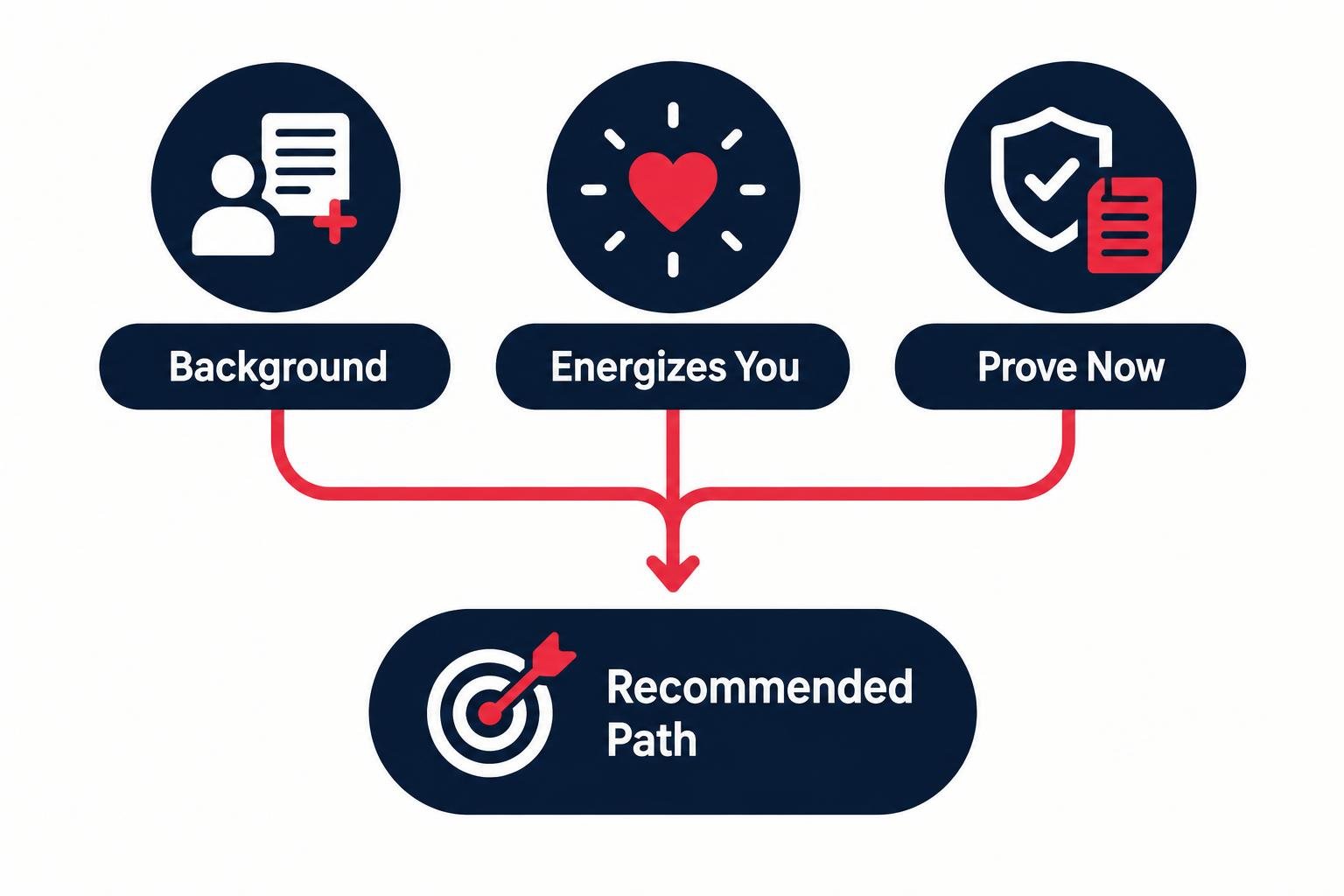
- What did you do before? IT background → SOC or sysadmin-to-security. Audit, legal, or business background → GRC. Writing or training background → awareness. No background at all → start with IT fundamentals; it’s the fastest route to your first real offer.
- What kind of work energizes you? Fast-paced triage and investigation → SOC. Structured documentation and process → GRC. Independent problem-solving and technical depth → offensive security.
- What can you actually prove right now? Certifications matter less than most beginners think. What gets you hired is evidence: a home lab writeup, a GRC gap analysis you did on a sample framework, a set of SOC alert triage notes from a practice environment. Pick the path where you can build proof within 2-3 months, not 12.
Building Your First Cybersecurity Portfolio
Whichever path you choose, employers want to see applied thinking, not just certificates.
- SOC path: Document 3-5 practice investigations (using free SIEM trial environments or sample datasets) with your reasoning for each verdict.
- GRC path: Pick a small, real organization (even a fictional one you design) and write a basic risk assessment or gap analysis against one framework.
- Offensive security path: Complete a handful of beginner-friendly practice labs and write clear, professional-style reports on what you found and how you’d fix it.
- IT-to-security path: Document any real troubleshooting or hardening work you’ve done, even informally, and frame it in security terms (what risk did it reduce?).
A portfolio doesn’t need to be flashy. It needs to show that you can think through a real problem the way someone in that role would.
Cybersecurity Interview Prep That Actually Helps
Generic "tell me about yourself" prep isn’t enough. For every path, be ready to walk through one specific example in detail: what the situation was, what you did, and what you’d do differently. Interviewers in security roles are testing whether you can reason under uncertainty, not whether you memorized definitions. Know the fundamentals (networking, OS basics, or your chosen framework) cold, because vague answers on basics are the fastest way to lose credibility.
Final Takeaway: Choosing Your Cybersecurity Career Path
There is no single "right" way into cybersecurity, but there is a wrong way to approach it: trying to prepare for everything at once. Pick the path that matches your existing background and the kind of work that actually holds your attention, build a small but real portfolio in that specific lane within a few months, and use certifications to confirm knowledge you’ve already started applying — not as a substitute for it. Progress in this field comes from depth in one area first, breadth later.