
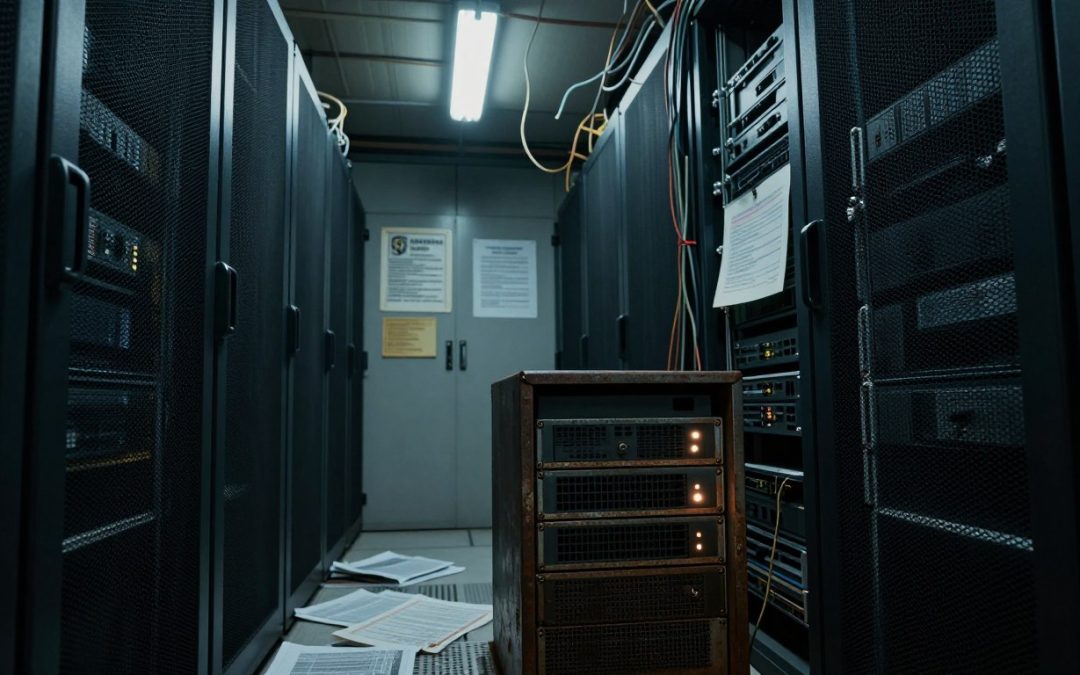
Modern businesses often overlook legacy hardware tucked away inside dark closets. These hidden machines frequently escape standard security updates, creating massive gaps for malicious actors.

Edit
Full screen
Delete
🔐 The Server You Don’t Think About Could Be the Biggest Risk in Your Organizati
Neglected assets bypass typical defense protocols, leaving digital perimeters wide open. Maintaining forgotten server security remains a vital piece of enterprise network security that leaders often ignore.
Finding these devices protects sensitive data from unauthorized access. Proactive management keeps infrastructure safe while ensuring compliance across every department.
Key Takeaways
- Identify legacy hardware to close hidden security gaps.
- Implement automated scanning for better visibility.
- Update legacy systems to prevent unauthorized access.
- Prioritize asset tracking to maintain network integrity.
- Regular audits help secure neglected digital infrastructure.
The Silent Threat of Unmanaged Infrastructure
When you cannot see your entire digital footprint, you cannot effectively defend it. Many organizations operate under the false assumption that their security perimeter is fully accounted for, yet unmanaged infrastructure often lurks in the shadows of the corporate network. These forgotten assets serve as open doors for malicious actors who specialize in finding the weakest links in your defense.
Why Visibility is the First Pillar of Cybersecurity
True cybersecurity visibility requires a complete and accurate inventory of every device connected to your systems. Without this foundational knowledge, security teams are essentially flying blind, unable to patch vulnerabilities or monitor traffic on unauthorized hardware. You cannot protect what you do not know exists.
Establishing total oversight helps mitigate several critical dangers:
- Reduced Attack Surface: Identifying and removing unnecessary hardware limits the entry points for hackers.
- Improved Compliance: Maintaining an accurate asset list is often a mandatory requirement for industry regulations.
- Proactive Patching: You can only update software if you are aware that the underlying device is still active.
The Psychological Trap of “Set It and Forget It”
The “set it and forget it” mentality is a common human bias that leads to significant Shadow IT risks. When a project concludes or a department shifts focus, the hardware used for that initiative is frequently left running in a corner of the server room or a cloud environment. Over time, these devices become digital relics that no one monitors or maintains.
This neglect creates a dangerous environment where unmanaged infrastructure remains active long after its original purpose has expired. Because these systems are ignored, they rarely receive security updates or configuration reviews. Eventually, they become the perfect staging ground for attackers to gain a foothold within your organization without triggering any alarms.
🔐 The Server You Don’t Think About Could Be the Biggest Risk in Your Organization
A single forgotten server can act as a silent invitation for cybercriminals to enter your private network. These devices often exist in the blind spots of IT departments, operating without oversight or security updates. When an asset is no longer tracked, it effectively drops out of your forgotten server security perimeter.
Defining the Forgotten Server
A forgotten server is any piece of hardware or virtual instance that remains active but lacks formal management. These assets are frequently left behind after projects conclude or departments undergo restructuring. Because they are not part of the standard inventory, they do not receive the same attention as production systems.
“Visibility is the bedrock of security; you cannot protect what you do not know exists.”
— Cybersecurity Industry Standard
How Neglected Hardware Becomes a Backdoor for Attackers
Neglected hardware serves as a low-hanging fruit for malicious actors scanning for entry points. Attackers prioritize these systems because they know that security teams rarely monitor them for suspicious activity. Once inside, a hacker can move laterally to access sensitive data across the entire organization.
The Lack of Patching Cycles
The primary danger of these devices is the total absence of patch management strategies. Without regular updates, these systems remain exposed to known exploits that were patched years ago on modern hardware. This creates significant legacy system vulnerabilities that are trivial for automated bots to identify and compromise.
Default Credentials and Misconfigurations
Many of these servers were set up with factory-default passwords that were never changed. When combined with weak configurations, these devices provide an open door for unauthorized access. The following table highlights the critical differences between managed and unmanaged infrastructure risks.
| Risk Factor | Managed Server | Forgotten Server |
| Patch Status | Updated Monthly | Years Outdated |
| Access Control | Multi-Factor Auth | Default Credentials |
| Monitoring | Real-time SIEM | None |
| Security Risk | Low | Critical |
Securing your network requires a proactive approach to identifying these hidden assets. By integrating discovery tools, you can ensure that no device remains in the dark. Prioritizing forgotten server security is essential to maintaining a resilient defense against modern threats.
Common Types of Forgotten Servers
Many organizations unknowingly harbor digital ghosts that threaten their security posture. These assets often remain active long after their original purpose has been fulfilled, which inadvertently expands your organization’s reducing attack surface efforts. By identifying these common culprits, IT teams can better prioritize their cleanup and decommissioning tasks.
Development and Staging Environments Left Online
Developers frequently spin up temporary environments to test new code or features. Once the project moves to production, these servers are often forgotten and left running in the background. Because these environments rarely receive the same security patches as production systems, they become easy targets for attackers looking for a way into your network.
Legacy File Servers and Deprecated Databases
Old file servers and databases are common fixtures in many corporate environments. They often contain sensitive historical data that was never properly migrated or wiped. Keeping these systems online without active monitoring is a major risk, as they lack modern security controls and are rarely updated.
Virtual Machines Created for One-Off Projects
Virtualization makes it incredibly simple to deploy new servers for short-term tasks. However, this convenience often leads to “VM sprawl,” where dozens of machines are created for a single project and never shut down. These orphaned virtual machines consume resources and provide an unmonitored entry point for malicious actors.
IoT Gateways and Edge Computing Devices
The rise of smart technology has introduced a variety of hardware to the corporate network. Securing IoT devices is a significant challenge because these units are often deployed in remote locations or hard-to-reach areas. If these gateways are not included in your standard patch management cycle, they can quickly become the weakest link in your infrastructure.
| Asset Type | Primary Risk | Security Priority |
| Staging Servers | Unpatched Software | High |
| Legacy Databases | Data Exposure | Critical |
| Orphaned VMs | Resource Hijacking | Medium |
| IoT Gateways | Unauthorized Access | High |
By focusing on securing IoT devices and auditing these common forgotten assets, you are effectively reducing attack surface risks across your entire organization. Regular maintenance ensures that your digital environment remains lean, efficient, and secure.
Why Shadow IT and Legacy Systems Escape Security Audits
The gap between rapid business growth and rigid security oversight creates a breeding ground for hidden risks. Often, the very tools designed to help teams move faster are the ones that introduce Shadow IT risks into the corporate environment. When departments prioritize speed over visibility, they inadvertently create blind spots that standard security tools cannot see.
The Friction Between Agility and Governance
Modern businesses demand instant access to software and hardware to stay competitive. This pressure for agility frequently clashes with cybersecurity audit best practices, which require time-consuming documentation and approval workflows. When governance feels like a roadblock, employees often find ways to bypass official channels to get their work done.
“The greatest enemy of security is not the attacker, but the friction that drives users to find unauthorized workarounds.”
— Industry Security Analyst
Departmental Silos and Decentralized Procurement
In many large organizations, departments operate like independent islands with their own budgets. This decentralized procurement allows teams to purchase cloud services or hardware without consulting the central IT department. Because these assets are never registered in the master inventory, they remain invisible to security teams until a breach occurs.
This lack of communication creates a fragmented network where no single person has a complete view of the infrastructure. Without a unified procurement policy, Shadow IT risks continue to multiply across the enterprise.
The “If It Isn’t Broken, Don’t Touch It” Mentality
Many organizations suffer from a deep-seated fear of disrupting stable workflows. This leads to the dangerous “if it isn’t broken, don’t touch it” mentality, which keeps outdated hardware running long past its expiration date. These legacy system vulnerabilities are often ignored because the cost of upgrading seems higher than the perceived risk of a breach.
The following table highlights the core differences between managed and unmanaged infrastructure:
| Feature | Managed Infrastructure | Unmanaged/Shadow IT |
| Visibility | Full oversight | Hidden/Unknown |
| Patching | Automated/Regular | Rare or nonexistent |
| Risk Level | Controlled | High/Critical |
| Audit Status | Compliant | Non-compliant |
Ignoring these legacy system vulnerabilities is a gamble that rarely pays off in the long run. Adopting cybersecurity audit best practices requires a cultural shift that values transparency over convenience. By breaking down silos and encouraging open communication, organizations can finally bring their hidden assets into the light.
The Anatomy of a Breach via Unmanaged Hardware
The path from a forgotten device to a full-scale data breach is surprisingly predictable. When organizations lose track of their hardware, they inadvertently create a map for cybercriminals to follow. Understanding this progression is essential for effective data breach prevention.
Initial Access Through Outdated Software
Attackers typically begin by scanning for exposed ports on unmanaged infrastructure. Because these devices often lack recent security patches, they serve as easy entry points. A single outdated server can provide the foothold needed to bypass perimeter defenses.
“Security is not a product, but a process of constant vigilance and adaptation.”
Lateral Movement Within the Internal Network
Once inside, attackers rarely stay on the initial device. They use the compromised hardware to scan the internal network for higher-value targets. By exploiting the implicit trust often granted to internal systems, they move silently toward sensitive data repositories.
This phase highlights why enterprise network security requires more than just a strong firewall. If internal systems are not segmented, a single forgotten machine can jeopardize the entire organization.
| Attack Stage | Primary Goal | Risk Level |
| Initial Access | Establish Foothold | High |
| Lateral Movement | Escalate Privileges | Critical |
| Exfiltration | Steal Data | Catastrophic |
Data Exfiltration and Ransomware Deployment
After gaining sufficient access, the final stage involves the actual damage. Attackers may exfiltrate proprietary information or deploy ransomware to lock critical systems. This devastating outcome is often the result of a small, forgotten asset that was never properly decommissioned.
Strengthening your enterprise network security means closing these gaps before they are exploited. By prioritizing data breach prevention, you ensure that your unmanaged infrastructure does not become the weakest link in your defense strategy.
Strategies for Discovering Ghost Assets in Your Network
You cannot protect what you do not know exists within your corporate walls. When hardware remains hidden from the central IT team, it becomes a silent vulnerability that attackers can easily exploit. Implementing a robust strategy for network asset discovery is the most effective way to shrink your attack surface.

Edit
Full screen
Delete
Network asset discovery
Conducting a Comprehensive Network Inventory
A successful inventory goes beyond a simple spreadsheet. You must actively scan your subnets to find every connected device, from printers to legacy servers. Automated tools are essential here, as they provide a real-time snapshot of your environment that manual logs simply cannot match.
Ensure that your inventory process covers both physical and virtual assets. By maintaining an updated database, you make identifying ghost assets a routine task rather than a frantic emergency response. Consistency is the key to long-term security success.
Analyzing Traffic Patterns to Identify Unknown Endpoints
Sometimes, a device is hidden because it does not appear on standard management consoles. However, these devices still need to communicate with the network to function. By monitoring traffic flows, you can spot unusual connections originating from unauthorized hardware.
Look for endpoints that communicate with external servers or internal databases they should not access. These anomalies often point directly to a forgotten staging server or an unmanaged IoT gateway. Traffic analysis acts as a detective, revealing devices that are trying to stay under the radar.
Interviewing Department Heads About Localized Solutions
Technology often enters an organization through departmental budgets rather than central IT procurement. This creates “Shadow IT” that remains invisible to your primary security tools. Engaging in open, friendly conversations with department leaders can uncover these localized solutions.
Ask managers about the specific tools their teams use to get work done. You might find that a marketing or research team has set up their own server to handle large data sets. Building a culture of transparency ensures that these assets are brought into the fold and properly secured before a breach occurs.
Implementing a Lifecycle Management Policy
Building a sustainable framework for your hardware ensures that no device is ever truly forgotten. By prioritizing IT asset management, organizations can gain full control over their digital footprint. This proactive stance helps teams avoid the risks associated with abandoned hardware that often hides in plain sight.
Establishing Clear Decommissioning Procedures
When a project ends, the hardware used to support it should not simply be left running. You need a formal process to retire devices safely and permanently. This includes wiping sensitive data and removing the asset from your network entirely.
Effective patch management strategies are essential during this phase to ensure that retiring devices do not leave security gaps. If a server is no longer needed, it should be powered down and physically disconnected. This simple step prevents attackers from finding an easy entry point into your environment.
The Importance of Documentation and Asset Tagging
You cannot protect what you do not know exists. Maintaining a central registry with detailed asset tagging allows your team to track every piece of hardware from deployment to disposal. This documentation serves as the single source of truth for your entire infrastructure.
- Assign a unique identifier to every new device.
- Record the owner, location, and purpose of the hardware.
- Update the status of the asset whenever changes occur.
Consistent record-keeping removes the guesswork from your daily operations. When everyone knows exactly what is on the network, it becomes much harder for shadow IT to take root.
Regular Audits as a Cultural Standard
Security is not a one-time event but a continuous process. Integrating cybersecurity audit best practices into your company culture ensures that your inventory remains accurate over time. These reviews should be scheduled regularly to catch any discrepancies before they become major vulnerabilities.
Encouraging a culture of accountability helps team members understand why tracking assets matters. When employees feel responsible for the hardware they use, they are more likely to report when a device is no longer required. This collective effort is the best defense against the accumulation of forgotten servers.
Tools and Technologies for Automated Asset Discovery
Modern technology offers powerful ways to automate the discovery of every asset connected to your infrastructure. Relying on manual spreadsheets is no longer enough to keep pace with today’s fast-moving digital environments. By implementing network asset discovery, you can gain a clear picture of your entire ecosystem in real time.

Edit
Full screen
Delete
Network asset discovery
Network Scanning Tools like Nmap and OpenVAS
Technical teams often turn to open-source powerhouses to map their internal networks. Tools like Nmap allow administrators to identify active hosts and open ports with incredible precision. Meanwhile, OpenVAS provides a deep dive into potential vulnerabilities, acting as a critical component of automated security scanning.
- Nmap: Excellent for mapping network topology and identifying live devices.
- OpenVAS: Ideal for vulnerability assessment and compliance checking.
- Custom Scripts: Useful for automating repetitive tasks across specific subnets.
Cloud-Native Asset Management Solutions
As organizations shift to the cloud, traditional methods of IT asset management often fall short. Cloud-native platforms provide dynamic tracking that scales automatically as your infrastructure grows. These solutions offer a unified dashboard that captures ephemeral resources, such as virtual machines or containers, that might otherwise vanish from your records.
| Feature | Traditional Tools | Cloud-Native Solutions |
| Scalability | Limited | High |
| Deployment | Manual | Automated |
| Visibility | Static | Real-time |
Integrating Discovery into SIEM Platforms
The true power of discovery lies in centralization. By feeding data from your scanners into a Security Information and Event Management (SIEM) platform, you create a single source of truth. This integration ensures that your IT asset management strategy is always informed by the latest automated security scanning data.
When your security team has a centralized view, they can respond to threats much faster. Effective network asset discovery is not just about finding devices; it is about turning that data into actionable intelligence. This proactive approach keeps your organization safe from the risks of unmanaged hardware.
Conclusion
Your network is a living ecosystem that requires constant attention to stay safe. Every device left in a dark corner of your infrastructure acts as a potential open door for intruders. Prioritizing visibility over these hidden assets is the most effective way to strengthen your overall security posture.
Data breach prevention starts with knowing exactly what exists within your environment. When you track every virtual machine and legacy server, you remove the blind spots that hackers love to exploit. This proactive approach turns your network into a fortress rather than a collection of loose ends.
Reducing attack surface requires a shift in how your team views hardware management. By adopting automated discovery tools and strict lifecycle policies, you ensure that no device stays active longer than necessary. These simple habits create a culture of accountability that protects your sensitive information from unexpected threats.
Take a moment today to audit your current environment. Reach out to your IT leads and verify the status of your existing hardware. Your commitment to these small steps will pay off by keeping your organization resilient against modern cyber risks.
FAQ
What exactly defines a “forgotten server” in a modern business network?
A forgotten server is essentially any piece of hardware or a virtual instance—such as an old Microsoft Azure VM or a Legacy File Server—that remains active on your network but is no longer monitored or maintained by your IT department. These “ghost assets” often stem from Shadow IT or temporary projects where the “set it and forget it” mentality took over, leaving them without critical patching cycles and vulnerable to modern threats.
How do unmanaged assets become a “backdoor” for cybercriminals?
Because these devices sit outside your standard security perimeter, they rarely receive updates, meaning they often harbor known CVE (Common Vulnerabilities and Exposures) that hackers love to exploit. Once an attacker gains Initial Access through one of these weak points, they can perform Lateral Movement across your internal network, eventually leading to Data Exfiltration or a full-scale Ransomware deployment.
Which types of servers are most likely to be overlooked during a security audit?
The most common culprits include Development and Staging Environments that were left online after a launch, Deprecated Databases, and Virtual Machines created for one-off tasks. We also see a rise in forgotten IoT Gateways and Edge Computing devices that departments might have installed independently without notifying the central security team.
Why does “Shadow IT” continue to be such a persistent problem for large organizations?
It often comes down to the friction between Agility and Governance. When departmental teams need to move fast, they may bypass official procurement channels, leading to Decentralized Procurement. This creates Departmental Silos where the “if it isn’t broken, don’t touch it” mentality thrives, keeping risky hardware hidden from the Vulnerability Management tools used by the security team.
What are the best tools for discovering hidden or “ghost” assets on a network?
To regain total visibility, many professionals rely on robust Network Scanning Tools like Nmap or OpenVAS. For a more comprehensive approach, you should look into Cloud-Native Asset Management solutions and ensure you are Integrating Discovery directly into your SIEM platform, such as Splunk or IBM QRadar, to keep a real-time pulse on every endpoint.
How can we prevent the accumulation of forgotten servers in the future?
The most effective solution is implementing a strict Lifecycle Management Policy. This includes establishing clear Decommissioning Procedures, maintaining rigorous Asset Tagging, and following the NIST Cybersecurity Framework. By making Regular Audits a standard part of your corporate culture, you can ensure that every device—whether physical or cloud-based—is either secured or powered down when its job is done.
Is it enough to just find the servers, or do we need a Zero Trust approach?
Finding them is just the first step. To truly secure a modern environment, organizations are moving toward a Zero Trust architecture. This means that even if a forgotten server exists, its ability to communicate with the rest of the network is strictly limited, preventing an attacker from using that unmanaged hardware as a staging ground for a larger breach.