
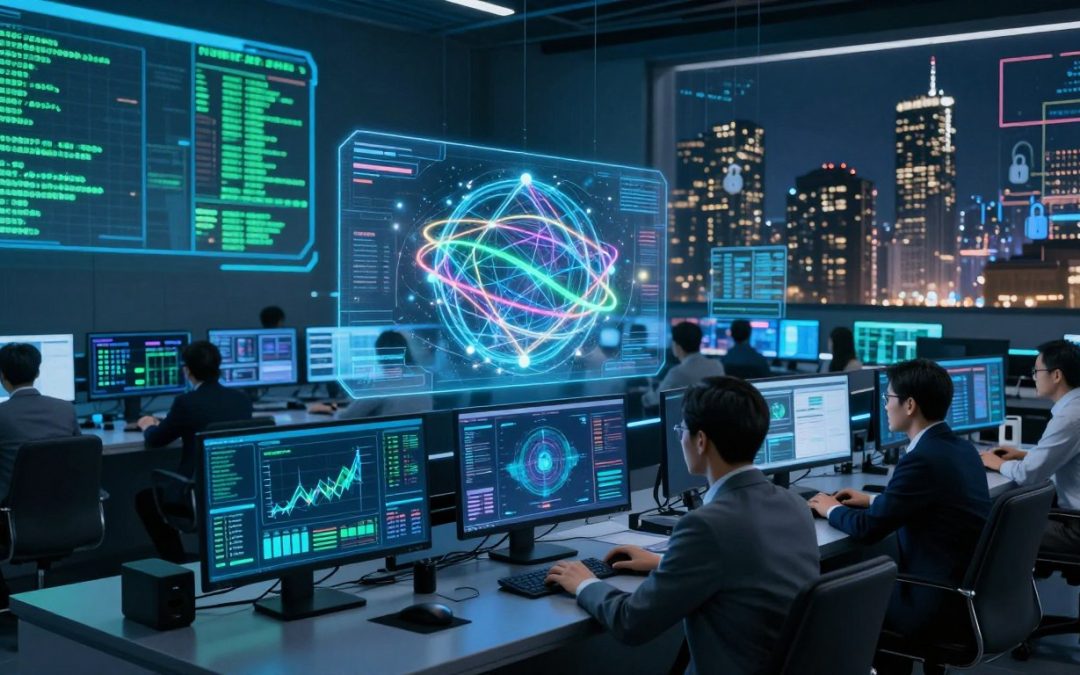
The landscape of cybersecurity is undergoing a significant transformation. Traditional manual defense strategies are being replaced by more advanced, autonomous protection systems.

Edit
Full screen
Delete
🚀 AI in Cybersecurity: From Manual Defense to Autonomous Protection
This shift is driven by the increasing complexity and sophistication of cyber threats. As a result, the role of AI in cybersecurity has become more crucial, enabling organizations to respond to threats more efficiently and effectively.
The evolution from manual to autonomous cybersecurity measures is not just a trend; it’s a necessity in today’s digital age.
Key Takeaways
- The shift from manual defense to autonomous protection is transforming cybersecurity.
- AI plays a crucial role in enhancing cybersecurity measures.
- Autonomous protection systems offer more efficient threat response.
- The complexity of cyber threats drives the need for advanced cybersecurity solutions.
- Organizations are adopting AI-driven cybersecurity to stay ahead of threats.
The Evolution of Cybersecurity Landscape
The cybersecurity landscape is rapidly evolving, driven by increasingly sophisticated threats. As we navigate this complex digital world, understanding the shifts in cybersecurity is crucial for protecting our assets.
Traditional Cybersecurity Approaches
Traditional cybersecurity methods have relied heavily on rule-based systems and signature-based detection. These approaches, while effective against known threats, struggle to keep pace with the rapidly evolving cyber threat landscape.
The Rising Tide of Cyber Threats
Cyber threats are becoming more frequent and sophisticated. Attackers are using AI and machine learning to enhance their capabilities, making defense more challenging.
Why Manual Defense Is No Longer Sufficient
Manual defense strategies are no longer sufficient due to the speed and complexity of modern cyber threats. Automated systems are needed to detect and respond to threats in real-time.
| Aspect | Traditional Cybersecurity | Modern Cybersecurity |
| Threat Detection | Signature-based | AI-driven |
| Response Time | Delayed | Real-time |
Understanding AI in Cybersecurity: From Manual Defense to Autonomous Protection
AI-powered cybersecurity is revolutionizing the way organizations defend against cyber threats, moving from manual to autonomous protection. This transformation is crucial in today’s digital landscape, where cyber threats are becoming increasingly sophisticated.
Defining AI-Powered Cybersecurity
AI-powered cybersecurity refers to the use of artificial intelligence technologies to enhance and automate the detection, prevention, and response to cyber threats. Machine learning algorithms and deep learning techniques are key components, enabling systems to learn from data and improve over time.
The Transition from Reactive to Proactive Defense
Traditional cybersecurity approaches are often reactive, responding to threats after they have occurred. AI-powered cybersecurity enables a proactive defense strategy, anticipating and preventing threats before they can cause harm. This shift is critical in staying ahead of evolving cyber threats.
Key Components of Autonomous Protection Systems
Autonomous protection systems rely on several key components, including advanced threat detection, real-time monitoring, and automated response mechanisms. These components work together to provide comprehensive security, minimizing the need for human intervention.
How AI Is Transforming Threat Detection
AI is transforming threat detection by enhancing the capabilities of cybersecurity systems. This transformation is crucial in today’s digital landscape, where threats are becoming increasingly sophisticated.
Pattern Recognition and Anomaly Detection
One of the key ways AI is improving threat detection is through pattern recognition and anomaly detection. AI systems can analyze vast amounts of data to identify patterns that may indicate a potential threat. By recognizing these patterns, AI can detect anomalies that might be missed by traditional security systems.
Behavioral Analysis Capabilities
AI’s behavioral analysis capabilities allow it to understand how users and systems typically behave within a network. This understanding enables AI to identify unusual behavior that could signal a security threat, even if the threat is previously unknown.
Real-Time Monitoring and Response
Another significant advantage of AI in threat detection is its ability to perform real-time monitoring and response. AI systems can continuously monitor network traffic and system activities, responding immediately to potential threats. This rapid response capability is crucial in minimizing the impact of a security breach.
By leveraging these advanced capabilities, AI is revolutionizing the field of threat detection, making cybersecurity more proactive and effective.
Machine Learning Algorithms in Cybersecurity
The application of machine learning algorithms in cybersecurity is transforming the way organizations approach threat detection and incident response. By leveraging these advanced algorithms, cybersecurity systems can now analyze vast amounts of data to identify patterns and anomalies that may indicate potential threats.
Supervised Learning for Known Threats
Supervised learning involves training machine learning models on labeled datasets to recognize known threats. This approach is effective for identifying and mitigating threats that have been encountered before, as the model can learn from historical data to improve its detection accuracy.
Unsupervised Learning for Zero-Day Attack Detection
Unsupervised learning algorithms are particularly useful for detecting zero-day attacks or unknown threats. By analyzing data without preconceived labels, these algorithms can identify unusual patterns or anomalies that may signify a new or previously unseen threat.
Reinforcement Learning for Adaptive Defense
Reinforcement learning enables cybersecurity systems to adapt and improve their defense mechanisms over time. By rewarding the system for correct identifications and penalizing it for false alarms, reinforcement learning helps create a more robust and adaptive cybersecurity posture.
AI-Powered Incident Response
AI is playing a pivotal role in modernizing incident response strategies, making them more proactive and intelligent. By leveraging AI-powered technologies, organizations can significantly enhance their ability to detect, respond to, and recover from cybersecurity incidents.
Automated Triage and Prioritization
One of the key benefits of AI in incident response is the ability to automate the triage and prioritization process. AI algorithms can quickly analyze vast amounts of data to identify the nature and severity of a threat, allowing security teams to focus on the most critical incidents first.
Intelligent Containment Strategies
AI-driven incident response systems can implement intelligent containment strategies to prevent the spread of malware or unauthorized access. By analyzing network traffic and system behavior, AI can identify the most effective containment measures to minimize damage.
Accelerated Recovery Processes
After containing a threat, AI can also accelerate the recovery process by providing detailed insights into the incident and recommending remediation steps. This enables organizations to restore normal operations more quickly, reducing downtime and associated costs.
| Incident Response Phase | AI-Powered Enhancement | Benefit |
| Triage and Prioritization | Automated threat analysis | Faster response to critical threats |
| Containment | Intelligent containment strategies | Reduced damage from security breaches |
| Recovery | Detailed incident insights and remediation guidance | Accelerated return to normal operations |
Real-World Applications of AI in Cybersecurity
Real-world applications of AI in cybersecurity are transforming the way organizations defend against sophisticated attacks. As technology advances, various industries are adopting AI-driven solutions to enhance their cybersecurity posture.
Financial Services Sector Case Studies
The financial services sector has been at the forefront of adopting AI in cybersecurity. For instance, banks are using AI-powered systems to detect fraudulent transactions in real-time. JPMorgan Chase has implemented AI-driven solutions to enhance their security infrastructure, significantly reducing false positives and improving incident response times.
Healthcare Industry Implementations
In the healthcare industry, AI is being used to protect sensitive patient data. AI-driven intrusion detection systems are being deployed to identify and mitigate potential threats. For example, Mount Sinai Health System has adopted AI-powered cybersecurity solutions to safeguard their networks and patient information.
Government and Critical Infrastructure Protection
Government agencies and critical infrastructure providers are also leveraging AI to bolster their cybersecurity. AI-powered systems are being used to monitor network traffic, detect anomalies, and respond to threats in real-time. The Department of Defense has initiated various projects to integrate AI into their cybersecurity frameworks, enhancing their ability to counter emerging threats.

Edit
Full screen
Delete
AI in Cybersecurity Applications
These real-world applications demonstrate the versatility and effectiveness of AI in enhancing cybersecurity across different sectors. As AI technology continues to evolve, we can expect even more innovative solutions to emerge.
Predictive Analytics and Threat Intelligence
As cyber threats continue to evolve, predictive analytics and threat intelligence have become crucial components in the cybersecurity arsenal. These advanced technologies enable organizations to anticipate potential threats, identify vulnerabilities, and adjust their security posture accordingly.
Forecasting Attack Vectors
Predictive analytics plays a vital role in forecasting attack vectors by analyzing historical data and identifying patterns that may indicate future attacks. According to a recent report, organizations that implement predictive analytics can reduce the risk of cyberattacks by up to 30%. Machine learning algorithms are particularly effective in this area, as they can process vast amounts of data to predict potential threats.
Vulnerability Assessment and Management
Vulnerability assessment and management are critical components of a proactive cybersecurity strategy. By identifying and addressing vulnerabilities before they can be exploited, organizations can significantly reduce their risk exposure. “The key to effective vulnerability management is continuous monitoring and assessment,” says cybersecurity expert, John Smith. Predictive analytics can help in this process by identifying potential vulnerabilities and predicting the likelihood of their exploitation.
Proactive Security Posture Adjustment
By leveraging predictive analytics and threat intelligence, organizations can adjust their security posture proactively. This involves implementing measures such as enhanced intrusion detection systems and conducting regular security audits. As noted by cybersecurity firm, Cyberark,
“Proactive security measures can significantly reduce the impact of cyberattacks.”
By staying ahead of potential threats, organizations can protect their assets more effectively.
AI for User and Entity Behavior Analytics (UEBA)
With AI-driven UEBA, organizations can now establish robust behavioral baselines to identify potential security risks. This advanced analytics capability is crucial in today’s complex cybersecurity landscape.
Establishing Behavioral Baselines
AI algorithms analyze vast amounts of user and entity data to create detailed profiles of normal behavior. This process involves monitoring various activities, such as login times, data access patterns, and network interactions. By establishing these baselines, AI systems can more effectively identify anomalies that may indicate a security threat.
Detecting Insider Threats
One of the most significant advantages of AI-powered UEBA is its ability to detect insider threats. Whether it’s a malicious employee or a compromised account, AI can identify suspicious behavior that deviates from the established baseline. This capability is particularly valuable in environments where insider threats are a significant concern.
Reducing False Positives
Traditional security systems often generate a high number of false positives, which can overwhelm security teams. AI-driven UEBA solutions help reduce this noise by providing more accurate threat detection. By learning from the data and adapting to new patterns, AI systems can significantly decrease the number of false alarms, allowing security teams to focus on real threats.
As stated by a cybersecurity expert, “AI-powered UEBA is a game-changer in the fight against sophisticated cyber threats. It’s not just about detecting anomalies; it’s about understanding the context and intent behind user behavior.”
“The future of cybersecurity lies in the ability to analyze and understand user behavior in real-time.”
Autonomous Security Operations Centers (SOCs)
Autonomous Security Operations Centers are revolutionizing the way organizations approach cybersecurity, offering a proactive defense mechanism. These advanced centers leverage AI and machine learning to enhance threat detection, incident response, and overall security posture.
AI-Augmented Security Analysts
AI-augmented security analysts are at the heart of autonomous SOCs. These intelligent systems augment human capabilities, enabling security teams to analyze vast amounts of data more efficiently. By automating routine tasks, AI frees up human analysts to focus on complex threats and strategic decision-making.
Orchestration and Automation of Security Workflows
The orchestration and automation of security workflows are critical components of autonomous SOCs. By integrating various security tools and systems, organizations can streamline their security operations, reducing response times and improving overall effectiveness. Key benefits include:
- Automated incident response
- Consolidated security event management
- Enhanced collaboration between security teams
24/7 Vigilance Without Human Fatigue
One of the significant advantages of autonomous SOCs is their ability to provide 24/7 vigilance without human fatigue. AI systems can monitor security events continuously, detecting potential threats in real-time. This capability ensures that organizations are always prepared to respond to emerging threats.

Edit
Full screen
Delete
autonomous security operations center
In conclusion, autonomous SOCs represent a significant advancement in cybersecurity operations. By leveraging AI-augmented security analysts, orchestrating security workflows, and maintaining 24/7 vigilance, organizations can significantly enhance their security posture.
Regulatory and Compliance Considerations
Regulatory and compliance considerations are at the forefront of the AI-driven cybersecurity revolution. As organizations increasingly adopt AI-powered cybersecurity systems, they must navigate a complex landscape of regulations and compliance requirements.
U.S. Cybersecurity Regulations and AI
The U.S. has implemented various cybersecurity regulations that impact the use of AI in cybersecurity. For instance, the National Institute of Standards and Technology (NIST) provides guidelines on cybersecurity standards, including those related to AI. Organizations must comply with these regulations to ensure the secure deployment of AI systems.
Data Protection and Privacy Laws
Data protection and privacy laws, such as the California Consumer Privacy Act (CCPA) and the General Data Protection Regulation (GDPR), play a crucial role in shaping AI-driven cybersecurity practices. These laws mandate the protection of sensitive data and impose strict guidelines on data handling and processing.
| Regulation | Description | Impact on AI Cybersecurity |
| NIST Cybersecurity Framework | Guidelines for cybersecurity standards | Provides a framework for securing AI systems |
| CCPA | Data protection and privacy law | Impacts data handling and processing in AI systems |
| GDPR | Comprehensive data protection regulation | Imposes strict data protection requirements on AI systems |
Ethical Guidelines for Autonomous Security Systems
As AI becomes more autonomous in cybersecurity, ethical considerations come to the forefront. Organizations must establish guidelines that ensure AI systems operate within ethical boundaries, respecting user privacy and preventing bias.
Challenges and Limitations of AI in Cybersecurity
The integration of AI in cybersecurity isn’t without its hurdles, including an ongoing arms race between attackers and defenders. As AI technologies become more sophisticated, so too do the methods used by cybercriminals to evade detection.
The Arms Race Between Attackers and Defenders
The use of AI in cybersecurity has led to an arms race between attackers and defenders. Attackers are now using AI to launch more sophisticated attacks, making it challenging for defenders to keep up.
As noted by cybersecurity experts, “The cat-and-mouse game between attackers and defenders has evolved into a complex battle of wits, with AI being a critical component on both sides.”
Data Quality and Training Issues
AI systems rely heavily on high-quality data to learn and improve. However, in cybersecurity, the data available for training AI models can be limited or biased, leading to data quality issues.
Ethical Considerations and Privacy Concerns
The deployment of AI in cybersecurity raises several ethical considerations, particularly regarding user privacy. Ensuring that AI systems protect sensitive information while maintaining security is a delicate balance.
Balancing Security with User Privacy
One of the significant challenges is balancing security with user privacy. AI systems must be designed to protect user data while detecting and responding to threats.
Potential for Algorithmic Bias
There’s also a potential for algorithmic bias in AI systems, which can lead to unfair outcomes or discrimination. Ensuring that AI algorithms are fair and transparent is crucial.
In conclusion, while AI has the potential to significantly enhance cybersecurity, it’s crucial to address the challenges and limitations associated with its implementation. By understanding these challenges, we can work towards creating more effective and responsible AI-powered cybersecurity systems.
Conclusion: Embracing the AI Revolution in Cybersecurity
The cybersecurity landscape is undergoing a significant transformation with the integration of Artificial Intelligence (AI). As discussed, traditional cybersecurity approaches are no longer sufficient to counter the rising tide of cyber threats. AI is revolutionizing the field by enabling autonomous protection, transforming threat detection, and enhancing incident response.
By leveraging machine learning algorithms, predictive analytics, and user and entity behavior analytics, organizations can proactively defend against known and unknown threats. Real-world applications in financial services, healthcare, and government sectors demonstrate the effectiveness of AI-driven cybersecurity solutions.
While there are challenges and limitations to be addressed, the benefits of embracing the AI revolution in cybersecurity are clear. As the threat landscape continues to evolve, adopting AI-powered cybersecurity solutions is crucial for staying ahead of potential threats. By doing so, organizations can ensure a more secure and resilient cybersecurity posture.
FAQ
What is AI-powered cybersecurity?
AI-powered cybersecurity refers to the use of artificial intelligence technologies to enhance and automate cybersecurity processes, including threat detection, incident response, and predictive analytics.
How does AI improve threat detection?
AI improves threat detection through pattern recognition, anomaly detection, and behavioral analysis, enabling organizations to identify and respond to threats in real-time.
What are the benefits of using machine learning algorithms in cybersecurity?
Machine learning algorithms can be used for supervised, unsupervised, and reinforcement learning, allowing organizations to detect known and unknown threats, improve incident response, and enhance overall cybersecurity posture.
How does AI-powered incident response work?
AI-powered incident response involves automated triage and prioritization, intelligent containment strategies, and accelerated recovery processes, enabling organizations to respond to incidents quickly and effectively.
What are some real-world applications of AI in cybersecurity?
AI is being used in various industries, including financial services, healthcare, and government, to enhance cybersecurity through threat detection, incident response, and predictive analytics.
What are the challenges and limitations of AI in cybersecurity?
The challenges and limitations of AI in cybersecurity include the ongoing arms race between attackers and defenders, data quality and training issues, and ethical considerations, such as balancing security with user privacy and potential algorithmic bias.
How does AI impact user and entity behavior analytics (UEBA)?
AI enhances UEBA by establishing behavioral baselines, detecting insider threats, and reducing false positives, enabling organizations to identify and respond to potential security threats.
What are autonomous security operations centers (SOCs)?
Autonomous SOCs use AI to augment security analysts, orchestrate and automate security workflows, and provide 24/7 vigilance without human fatigue, enhancing the efficiency and effectiveness of cybersecurity operations.
What are the regulatory and compliance considerations for AI in cybersecurity?
Organizations must comply with U.S. cybersecurity regulations, data protection and privacy laws, and ethical guidelines for autonomous security systems, ensuring that AI-powered cybersecurity solutions are deployed responsibly.
How can organizations ensure the effective deployment of AI in cybersecurity?
Organizations can ensure effective deployment by addressing data quality and training issues, mitigating potential algorithmic bias, and balancing security with user privacy, ultimately embracing the AI revolution in cybersecurity.