
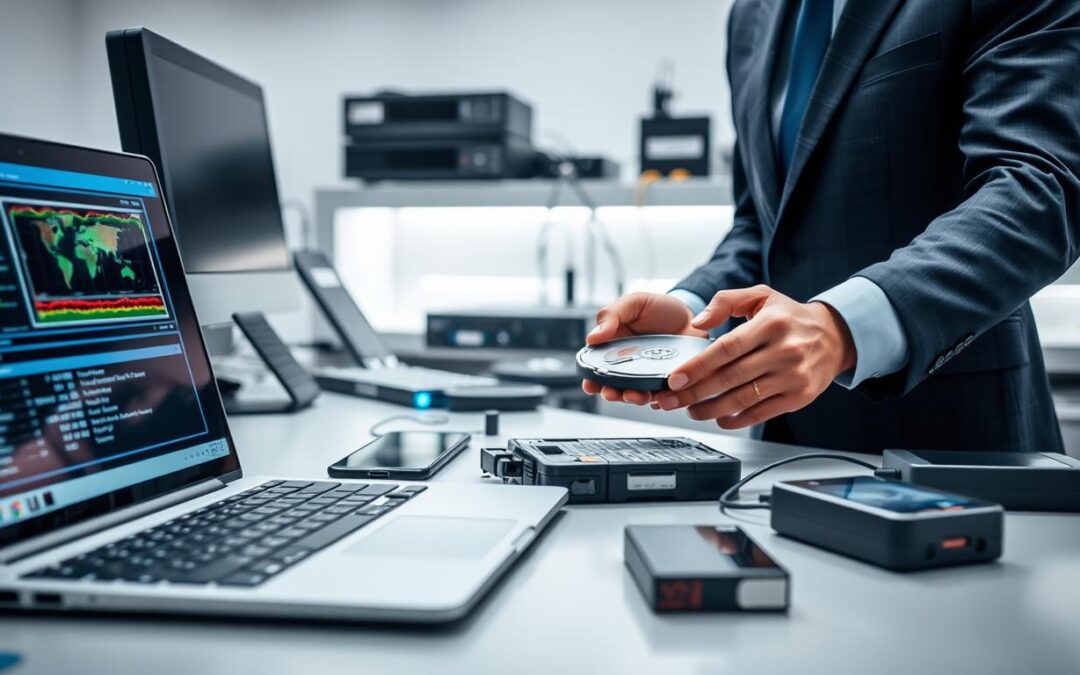
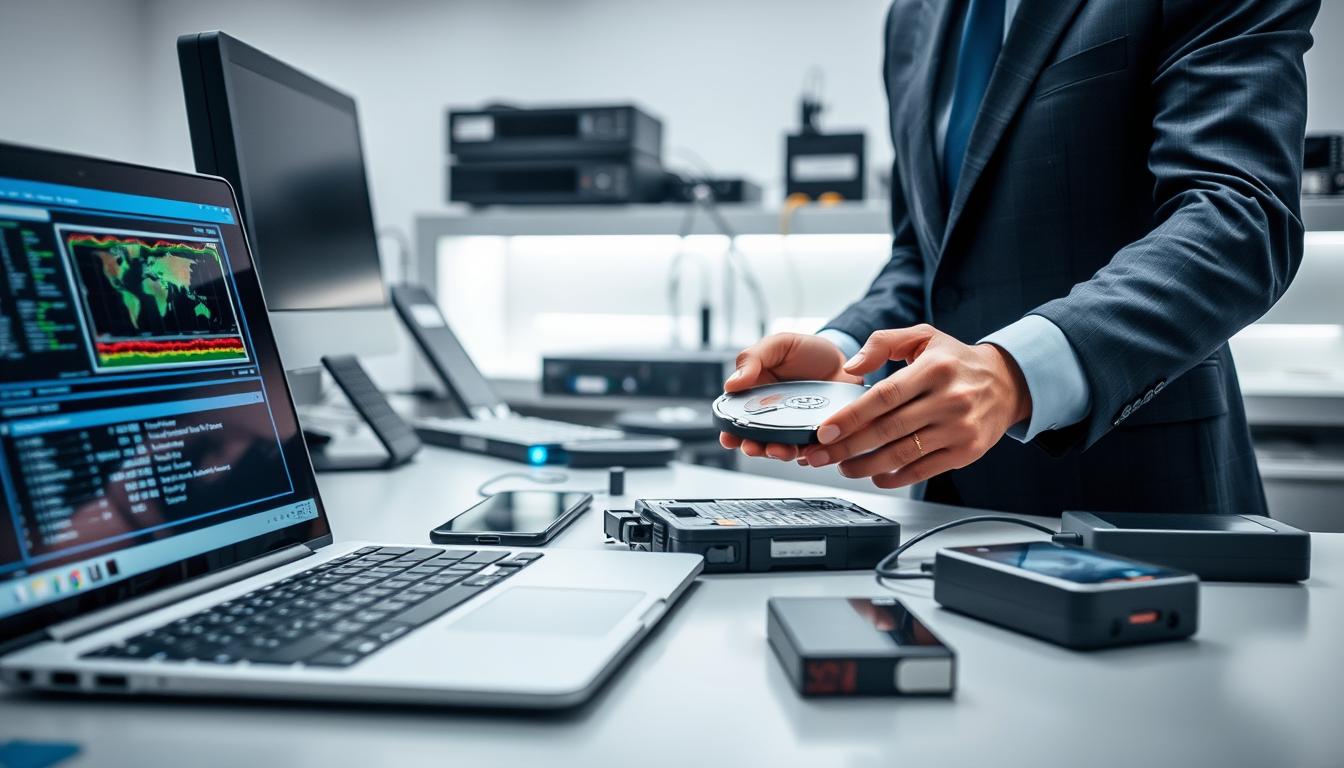
As we step into 2025, the landscape of cybersecurity and forensic analysis is rapidly evolving. Digital forensics tools play a crucial role in investigating cybercrimes and analyzing digital evidence.
Edit
Full screen
Delete
The Ultimate Guide to Digital Forensics Tools in 2025
The year 2025 brings new challenges and advancements in digital forensics. Effective digital forensics tools are essential for professionals to stay ahead in the field. This guide will walk you through the latest developments and key tools in digital forensics.
Key Takeaways
- Understanding the importance of digital forensics tools in 2025.
- Overview of the latest advancements in cybersecurity.
- Role of digital forensics in forensic analysis.
- Key features to look for in digital forensics tools.
- Best practices for implementing digital forensics tools.
The Digital Forensics Landscape in 2025
As we step into 2025, digital forensics continues to transform, driven by technological advancements and the increasing complexity of digital crimes. The field has come a long way since its inception, evolving to tackle new challenges and incorporate innovative tools and methodologies.
Evolution of Digital Forensics Over the Past Decade
Over the past decade, digital forensics has undergone significant evolution. Key developments include:
- The integration of artificial intelligence and machine learning to enhance analysis capabilities.
- The rise of cloud forensics, necessitated by the growing reliance on cloud storage.
- Advancements in encryption and decryption techniques, affecting how data is accessed and analyzed.
These advancements have transformed the digital forensics landscape, enabling investigators to tackle complex cases more effectively.
Current Challenges Facing Digital Forensic Investigators
Despite these advancements, digital forensic investigators face numerous challenges, including:
- Data volume and complexity: The sheer amount of data and its complexity can overwhelm investigators.
- Legal and ethical considerations: Issues surrounding privacy and data protection continue to pose significant challenges.
- Keeping pace with technology: The rapid evolution of technology requires investigators to continually update their skills and tools.
Addressing these challenges is crucial for the future of digital forensics, ensuring that investigations remain effective and efficient.
The Ultimate Guide to Digital Forensics Tools in 2025
As we dive into 2025, the landscape of digital forensics tools continues to evolve, offering advanced capabilities for investigators. The complexity of modern cybercrimes demands sophisticated tools that can handle diverse data types and sources.
Core Capabilities of Modern Forensic Tools
Modern digital forensics tools have advanced significantly, providing a wide range of capabilities. These include:
- Multi-format data processing: The ability to handle various file systems and data formats.
- Advanced search functionalities: Enabling quick identification of relevant evidence.
- Automated analysis features: Streamlining the investigation process by automatically analyzing data.
According to a leading cybersecurity expert, “The future of digital forensics lies in the tools’ ability to integrate AI and machine learning for more efficient analysis.” This integration is already seen in some of the latest tools.
Evaluation Criteria for Selecting the Right Tools
Selecting the appropriate digital forensics tool is crucial for the success of an investigation. Key evaluation criteria include:
| Criteria | Description | Importance Level |
| Compatibility | Ability to work with various operating systems and file formats | High |
| Scalability | Capacity to handle large volumes of data | High |
| User Interface | Ease of use and intuitive design | Medium |
As noted by a forensic expert, “The right tool can make a significant difference in the efficiency and accuracy of an investigation.”
Essential Disk and Data Capture Tools
In the realm of digital forensics, the right tools are crucial for capturing and analyzing data effectively. The integrity of digital evidence depends on how well these tools can create forensic images, capture data, and recover information from various devices.
Forensic Imaging Solutions
Forensic imaging is a critical step in digital forensics, involving the creation of a bit-for-bit copy of the original evidence. This process ensures that the original data remains unaltered during the investigation.
FTK Imager and Alternatives
FTK Imager is a popular tool for creating forensic images. It supports various image formats and can create images from physical drives, logical drives, and even individual files. Alternatives to FTK Imager include EnCase and X-Ways Forensics, which offer additional features such as built-in analysis capabilities.
Guymager and Open Source Options
Guymager is another powerful forensic imaging tool, particularly favored in Linux environments. It supports multiple image formats and is designed for creating forensic images of physical devices. Other open-source options include dc3dd and dd, which are command-line tools used for imaging.
Write Blockers and Hardware Acquisition Tools
Write blockers are essential hardware or software tools that prevent any write operations to the evidence device, ensuring its integrity. Hardware write blockers like those from Tableau or WiebeTech are commonly used in forensic labs. These devices sit between the evidence drive and the forensic workstation, blocking any write commands.
| Tool | Type | Key Features |
| FTK Imager | Forensic Imaging | Supports various image formats, creates images from physical and logical drives |
| Guymager | Forensic Imaging | Supports multiple image formats, designed for Linux environments |
| Tableau Write Blocker | Hardware Write Blocker | Prevents write operations to evidence devices, ensures data integrity |
Data Recovery Specialists: Autopsy and EnCase
Autopsy is a digital forensics platform that provides a comprehensive set of tools for data recovery and analysis. It supports various image formats and can recover deleted files, analyze file systems, and more. EnCase is another powerful tool that offers advanced data recovery capabilities, including the ability to analyze encrypted data and recover data from damaged devices.
Both Autopsy and EnCase are widely used in digital forensic investigations due to their robust feature sets and ability to handle complex cases.
Network Forensics and Traffic Analysis Tools
Network forensics and traffic analysis tools are revolutionizing the way we approach cybersecurity threats in 2025. These tools enable investigators to capture, analyze, and reconstruct network traffic, providing critical insights into cybercrimes.
Edit
Delete
Packet Capture and Analysis Software
Packet capture and analysis software are essential for network forensics. They allow investigators to intercept and log network traffic, which can then be analyzed to detect anomalies or evidence of cybercrimes.
Wireshark Advanced Features for 2025
Wireshark remains a leading tool in packet capture and analysis. Its advanced features in 2025 include enhanced protocol support and improved performance on high-speed networks. Wireshark’s ability to decrypt SSL/TLS traffic is particularly valuable for analyzing encrypted communications.
NetworkMiner and Specialized Alternatives
NetworkMiner is another powerful tool that specializes in network traffic analysis. It can extract files and images from network traffic, making it invaluable for forensic investigations. Other specialized alternatives offer unique features tailored to specific investigative needs.
Network Traffic Reconstruction Tools
Network traffic reconstruction tools are vital for piecing together the events surrounding a cybercrime. These tools help investigators understand the sequence of events and identify potential entry points or vulnerabilities.
Zeek (formerly Bro) and Its Ecosystem
Zeek is a robust network analysis framework that provides detailed insights into network activities. Its scripting language allows for customizable analysis, making it a favorite among researchers. The Zeek ecosystem includes various tools that enhance its capabilities, such as data visualization and anomaly detection.
Commercial Solutions: Fidelis Network and ExtraHop
Commercial solutions like Fidelis Network and ExtraHop offer advanced network traffic analysis capabilities. Fidelis Network provides comprehensive threat detection and response, while ExtraHop focuses on real-time network monitoring and analysis. Both solutions are highly regarded for their performance and scalability.
Mobile Device Forensics Solutions
The increasing reliance on mobile devices has made mobile device forensics a crucial aspect of digital forensics investigations. As smartphones continue to evolve, they store a vast amount of personal and professional data, making them a rich source of evidence in various investigations.
Advanced iOS Forensic Tools
iOS devices, known for their security features, require specialized tools for forensic analysis. Two prominent tools in this category are Cellebrite UFED and Oxygen Forensic Detective.
Cellebrite UFED and Oxygen Forensic Detective
Cellebrite UFED is renowned for its ability to extract data from a wide range of iOS devices. Oxygen Forensic Detective, on the other hand, offers advanced data extraction and analysis capabilities, including password cracking and data decryption.
Elcomsoft iOS Forensic Toolkit
Elcomsoft iOS Forensic Toolkit provides a comprehensive solution for extracting data from iOS devices, including the ability to extract data from backups and cloud storage services.
Android Forensic Tools
Android devices, with their diverse range of manufacturers and operating system versions, present unique challenges for forensic investigators. Tools like Magnet AXIOM and MSAB XRY are designed to tackle these challenges.
Magnet AXIOM and MSAB XRY
Magnet AXIOM offers a comprehensive digital forensic platform that supports the analysis of Android devices, among other sources. MSAB XRY is known for its ability to extract data from a wide range of Android devices, including those with advanced security features.
Andriller and Open Source Alternatives
Andriller is a specialized tool for Android forensic analysis, offering features like password cracking and data extraction. Open-source alternatives provide cost-effective solutions for investigators, with capabilities ranging from data recovery to deep file system analysis.
Cloud Data Extraction Capabilities
With the increasing use of cloud services, the ability to extract data from cloud storage has become a critical aspect of mobile device forensics.
Belkasoft Evidence Center
Belkasoft Evidence Center is a digital forensic tool that supports the extraction and analysis of data from various cloud services, providing a comprehensive view of the evidence.
BlackBag BlackLight
BlackBag BlackLight is another powerful tool for cloud data extraction, offering advanced capabilities for analyzing data from cloud storage services.
| Tool | Platform | Key Features |
| Cellebrite UFED | iOS | Data extraction from various iOS devices |
| Oxygen Forensic Detective | iOS | Advanced data extraction and analysis |
| Magnet AXIOM | Android | Comprehensive digital forensic platform |
| MSAB XRY | Android | Data extraction from Android devices |
Memory Forensics and Malware Analysis Tools
As cyber threats evolve, the importance of memory forensics and malware analysis tools cannot be overstated. These tools are crucial for understanding and combating sophisticated cyber-attacks that target system memory and employ complex malware.
RAM Capture and Analysis Software
RAM capture and analysis are critical components of memory forensics. Specialized tools are used to capture the contents of a system’s RAM, providing valuable data for analysis.
Volatility Framework 3.0 and Beyond
The Volatility Framework is a widely-used, open-source tool for RAM analysis. Version 3.0 and later releases have enhanced its capabilities, allowing for more efficient and effective analysis of memory dumps. Key features include support for multiple operating systems and advanced plugins for malware detection.
Rekall and DumpIt
Rekall is another powerful tool for memory forensics, offering advanced analysis capabilities. DumpIt is a simple tool for creating memory dumps from Windows systems. Together, these tools provide a comprehensive solution for RAM capture and analysis. Rekall’s flexibility and DumpIt’s ease of use make them valuable assets in digital investigations.
Malware Detection and Reverse Engineering Tools
Malware detection and reverse engineering are essential for understanding and mitigating cyber threats. Advanced tools are used to analyze malware, identify its functionality, and develop countermeasures.
Ghidra and IDA Pro
Ghidra, developed by the NSA, is a powerful reverse engineering tool that supports multiple platforms. IDA Pro is a commercial tool renowned for its advanced analysis capabilities. Both tools offer deep insights into malware, enabling investigators to understand its inner workings.
REMnux and FLARE VM
REMnux is a Linux distribution specifically designed for malware analysis, providing a comprehensive toolkit for reverse engineering. FLARE VM is a Windows-based platform that offers a similar set of tools. These platforms streamline the malware analysis process, making it easier to identify and counter threats.
| Tool | Purpose | Key Features |
| Volatility Framework | RAM Analysis | Multi-OS support, advanced plugins |
| Ghidra | Reverse Engineering | Multi-platform support, deep analysis |
| REMnux | Malware Analysis | Comprehensive toolkit, Linux-based |

Edit
Full screen
Delete
memory forensics tools
Legal and Ethical Considerations for Forensic Tools
In the realm of digital forensics, legal and ethical considerations play a pivotal role in ensuring the integrity of investigations. The use of digital forensics tools is not just about extracting data; it’s about doing so within a framework that respects legal boundaries and ethical standards.
Chain of Custody and Admissibility Requirements
Maintaining a proper chain of custody is crucial for the admissibility of digital evidence in court. This involves meticulously documenting every step of the evidence handling process, from collection to analysis. Investigators must use tools that support this process, ensuring that all actions are tracked and that the evidence is preserved in its original state.
- Use of write-blockers to prevent data alteration
- Detailed logging of all investigative actions
- Secure storage of evidence
Privacy Concerns and Compliance with Regulations
Digital forensic investigations often involve sensitive personal data, raising significant privacy concerns. Investigators must comply with regulations such as GDPR and CCPA, ensuring that their methods respect individual privacy rights while still allowing for effective investigation.
- Understanding relevant privacy laws and regulations
- Implementing data minimization techniques
- Ensuring transparency in data handling practices
By balancing the need for thorough investigations with legal and ethical considerations, digital forensic professionals can ensure that their work is both effective and compliant with legal standards.
Open Source vs. Commercial Forensic Tools
The choice between open source and commercial forensic tools is a critical decision for digital forensic investigators in 2025. Both types of tools have their advantages and disadvantages, which are discussed in this section.
Top Open Source Solutions for 2025
Open source forensic tools have gained popularity due to their flexibility and cost-effectiveness. Two notable open source solutions are:
SANS SIFT Workstation
The SANS SIFT Workstation is a powerful open source forensic tool that provides a comprehensive suite of tools for digital forensic analysis. It is widely used in the industry for its robust features and frequent updates.
Kali Linux Forensics Mode
Kali Linux Forensics Mode is another popular open source tool that offers a range of forensic capabilities. It is particularly known for its ability to perform digital forensics without installing the operating system on the analysis machine.
| Tool | Key Features |
| SANS SIFT Workstation | Comprehensive suite of tools, frequent updates |
| Kali Linux Forensics Mode | Forensic capabilities without installation, versatile |
Leading Commercial Platforms and Their Advantages
Commercial forensic tools, on the other hand, offer support and validation, which can be crucial in legal proceedings. Two leading commercial platforms are:
AccessData Forensic Toolkit (FTK)
AccessData FTK is a robust commercial tool known for its comprehensive analysis capabilities and user-friendly interface. It is widely used by law enforcement and corporate investigators.
Guidance Software EnCase
Guidance Software EnCase is another prominent commercial tool that offers advanced forensic analysis features. It is recognized for its ability to handle complex investigations and provide detailed reports.
| Tool | Key Features |
| AccessData FTK | Comprehensive analysis, user-friendly interface |
| Guidance Software EnCase | Advanced analysis features, detailed reporting |

Edit
Full screen
Delete
open source vs commercial forensic tools
In conclusion, both open source and commercial forensic tools have their strengths and weaknesses. The choice between them depends on the specific needs of the investigation, including factors like budget, complexity, and the need for legal admissibility.
Conclusion: Building Your Digital Forensics Toolkit
As we navigate the complex landscape of digital forensics in 2025, it’s clear that a well-rounded toolkit is essential for effective cybersecurity and investigations. The tools and techniques discussed in this guide provide a foundation for building a comprehensive digital forensics toolkit.
To stay ahead in the field, it’s crucial to remain updated with the latest advancements in digital forensics tools and techniques. This includes integrating new tools into your investigative workflows to enhance your cybersecurity capabilities and improve the efficiency of your investigations.
A robust digital forensics toolkit should include a range of tools for disk and data capture, network forensics, mobile device forensics, and memory forensics. By combining these tools with a deep understanding of their applications and limitations, investigators can effectively respond to emerging threats and support their investigations with robust evidence.
Ultimately, building a comprehensive digital forensics toolkit requires ongoing education, training, and investment in the latest tools and techniques. By doing so, investigators can ensure they are well-equipped to handle the challenges of modern cybersecurity and investigations.
FAQ
What are the most commonly used digital forensics tools in 2025?
The most commonly used digital forensics tools in 2025 include FTK Imager, Guymager, Autopsy, EnCase, Wireshark, and Cellebrite UFED, among others.
How do I choose the right digital forensics tool for my needs?
To choose the right digital forensics tool, consider factors such as compatibility, scalability, user interface, and the type of data you need to analyze. Evaluate the tool’s core capabilities, such as its ability to handle various data types and sources.
What is the difference between open source and commercial digital forensics tools?
Open source digital forensics tools, such as SANS SIFT Workstation and Kali Linux Forensics Mode, are freely available and often customizable, while commercial tools, like AccessData Forensic Toolkit (FTK) and Guidance Software EnCase, offer vendor support and are often more user-friendly.
How do digital forensics tools handle large volumes of data?
Modern digital forensics tools are designed to handle large volumes of data efficiently, using techniques such as data carving, indexing, and parallel processing to speed up analysis.
What are the key considerations for ensuring the admissibility of digital evidence in court?
To ensure the admissibility of digital evidence in court, maintain a proper chain of custody, use validated tools and methods, and comply with relevant regulations and standards.
Can digital forensics tools be used for both Windows and macOS investigations?
Yes, many digital forensics tools, such as Autopsy and EnCase, support investigations on both Windows and macOS platforms, as well as other operating systems.
How do digital forensics tools handle encryption and password-protected data?
Some digital forensics tools, like Elcomsoft iOS Forensic Toolkit and Magnet AXIOM, offer capabilities to bypass or crack encryption and password-protected data, while others may require additional software or techniques.
What is the role of memory forensics in digital investigations?
Memory forensics involves analyzing the contents of a computer’s RAM to identify malware, detect suspicious activity, and extract valuable evidence, using tools like Volatility Framework and Rekall.
How do I stay up-to-date with the latest developments in digital forensics tools?
Stay current with the latest developments in digital forensics tools by attending conferences, following industry blogs, and participating in online forums and training sessions.