
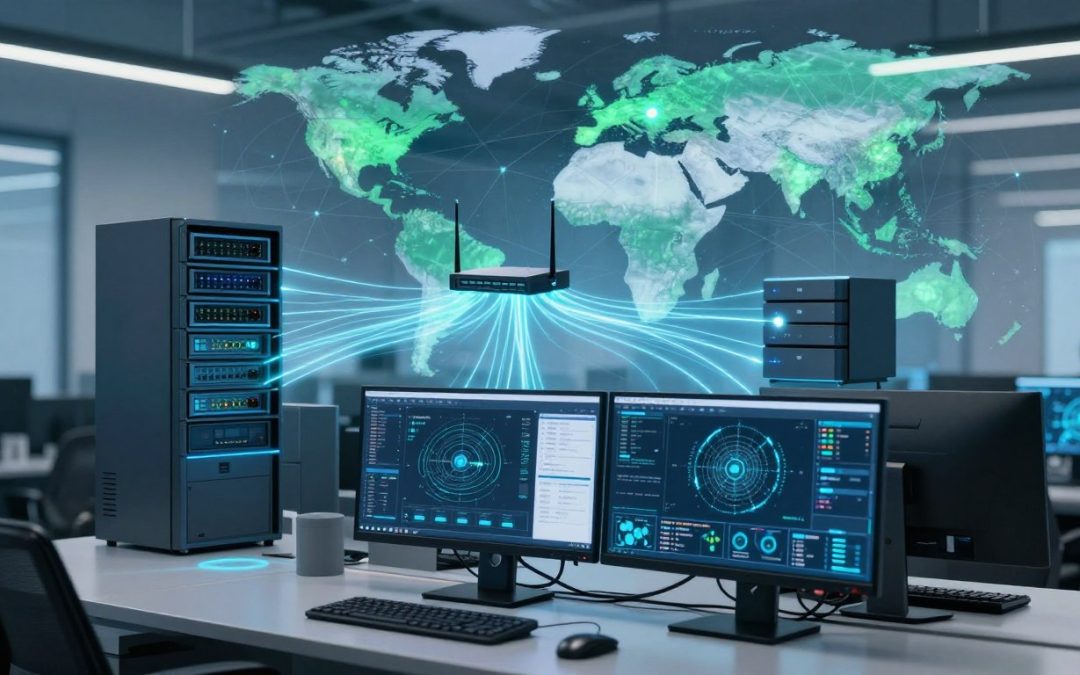
The modern corporate network is the backbone of any successful enterprise, providing the necessary connectivity and security for daily operations.
It spans from the vast global internet to the individual local desktop, encompassing a complex array of technologies and infrastructures.

Edit
Full screen
Delete
🔐 Anatomy of a Corporate Network — From Global Web to Local Desktop 🔐
Understanding the intricacies of network infrastructure and network architecture is crucial for maintaining the integrity and efficiency of this network.
A well-designed corporate network ensures seamless communication, data transfer, and access to resources, thereby supporting the overall goals of the organization.
Key Takeaways
- The corporate network is vital for enterprise operations.
- It encompasses a wide range of technologies and infrastructures.
- Understanding network infrastructure and architecture is key to maintaining network integrity.
- A well-designed network supports organizational goals.
- Security and connectivity are paramount in a corporate network.
The Corporate Network Landscape in 2023
In 2023, corporate networks are at a critical juncture, balancing between the need for enhanced connectivity and robust security measures. The landscape is characterized by a mix of traditional and modern infrastructure.
Evolution of Enterprise Networks
Enterprise networks have evolved significantly over the years, from simple, isolated networks to complex, interconnected systems. Cybersecurity has become a top priority due to the rise in cyber threats.
The shift towards cloud services and remote work has further complicated network management, necessitating advanced solutions for network infrastructure.
Key Components Overview
A corporate network comprises various components, including hardware, software, and security measures. Understanding these elements is crucial for designing an efficient network.
Physical vs. Virtual Infrastructure
Networks can be categorized into physical and virtual infrastructure. Physical infrastructure includes tangible hardware like routers and switches, while virtual infrastructure encompasses software-defined networks and virtualized resources.
| Aspect | Physical Infrastructure | Virtual Infrastructure |
| Hardware Dependency | High | Low |
| Scalability | Limited | High |
| Security | Varies | Configurable |
As seen in the table, virtual infrastructure offers greater scalability and flexibility, making it an attractive option for modern enterprise networks.
Where It All Begins: The Internet Edge
As the gateway to the global network, the internet edge plays a pivotal role in corporate connectivity. It is here that corporate networks interface with the wider internet, facilitating communication, data exchange, and access to cloud services.
Edit
Delete
Internet Service Providers and Corporate Connectivity
Internet Service Providers (ISPs) are crucial in establishing and maintaining corporate internet connectivity. They offer various connection types, including fiber-optic, DSL, and cable, each with its own advantages and limitations. Reliable ISPs ensure high uptime and fast connection speeds, which are critical for business operations.
“The choice of ISP can significantly impact a corporation’s ability to maintain consistent and secure internet connectivity,” as noted by industry experts. This underlines the importance of selecting an ISP that meets the specific needs of a corporate network.
Edge Routers and Their Critical Role
Edge routers are another vital component at the internet edge. They serve as the boundary between the corporate network and the internet, routing traffic efficiently and securely. Modern edge routers are equipped with advanced security features, such as firewalls and VPN support, to protect the network from external threats.
SD-WAN and Modern Connectivity Solutions
Software-Defined Wide Area Networking (SD-WAN) has revolutionized corporate connectivity by providing a more flexible, secure, and cost-effective alternative to traditional WAN architectures. SD-WAN solutions enable businesses to utilize a combination of connection types, including broadband and MPLS, to create a robust and resilient network.
By leveraging SD-WAN, corporations can improve network performance, reduce costs, and enhance security. As stated by a leading networking expert, “SD-WAN represents a significant step forward in network architecture, offering businesses greater agility and control over their connectivity.”
The First Line of Defense: Perimeter Security
As cyber threats become more sophisticated, the importance of robust perimeter security cannot be overstated. Perimeter security is the first line of defense against external threats, protecting the corporate network from unauthorized access and malicious activities.
Next-Generation Firewalls
Next-generation firewalls (NGFWs) are a critical component of perimeter security. They provide advanced threat detection and prevention capabilities, going beyond traditional firewalls by incorporating features such as deep packet inspection and application awareness. NGFWs can identify and block sophisticated threats, including malware and intrusion attempts.
Intrusion Prevention Systems
Intrusion Prevention Systems (IPS) are designed to detect and prevent intrusion attempts in real-time. By monitoring network traffic for suspicious activity, IPS can mitigate potential threats before they cause harm. Modern IPS solutions are often integrated with NGFWs to provide comprehensive security.
DDoS Protection Mechanisms
Distributed Denial of Service (DDoS) attacks can overwhelm a network, rendering it unavailable to users. DDoS protection mechanisms help mitigate such attacks by detecting and filtering out malicious traffic. Techniques include rate limiting, IP blacklisting, and traffic scrubbing.
Security Operations Centers (SOCs)
Security Operations Centers (SOCs) play a vital role in maintaining network security. SOCs are centralized units that monitor, detect, and respond to security incidents. They utilize advanced tools and techniques to analyze threats and coordinate incident response efforts.
| Security Component | Function | Benefits |
| Next-Generation Firewalls | Advanced threat detection and prevention | Blocks sophisticated threats, enhances network security |
| Intrusion Prevention Systems | Real-time intrusion detection and prevention | Mitigates potential threats, reduces risk |
| DDoS Protection Mechanisms | Mitigation of DDoS attacks | Ensures network availability, prevents service disruption |
In conclusion, a robust perimeter security strategy is essential for protecting corporate networks. By leveraging next-generation firewalls, intrusion prevention systems, DDoS protection mechanisms, and Security Operations Centers, organizations can significantly enhance their security posture.
The Demilitarized Zone (DMZ)
A Demilitarized Zone (DMZ) acts as a buffer zone between the public internet and an organization’s internal network. This separation is crucial for enhancing security by segregating public-facing services from the internal network.
Purpose and Architecture
The primary purpose of a DMZ is to add a layer of security to an organization’s network by segregating its public-facing services from the internal network. The architecture typically involves placing public-facing servers, such as web servers, in the DMZ. This setup prevents direct access to the internal network from the internet, thereby reducing the risk of cyberattacks.
The DMZ is usually configured using a combination of firewalls and network devices. Firewalls are used to control the flow of traffic between the internet, the DMZ, and the internal network. This configuration ensures that even if a server in the DMZ is compromised, the attacker will face another layer of security before accessing the internal network.
Web Servers and Public-Facing Services
Web servers and other public-facing services are typically hosted within the DMZ. These services include:
- Web servers hosting public websites
- Mail servers handling incoming and outgoing emails
- FTP servers for file transfers
By hosting these services in the DMZ, organizations can ensure that they are accessible to the public while keeping the internal network secure.

Edit
Full screen
Delete
DMZ Network Architecture
Reverse Proxies and Load Balancers
Reverse proxies and load balancers are critical components in a DMZ setup. A reverse proxy sits between the internet and the web servers, protecting the identity of the internal servers and distributing incoming requests. Load balancers distribute the incoming traffic across multiple servers to improve responsiveness, reliability, and scalability of applications.
Cloud-Based DMZ Solutions
With the increasing adoption of cloud services, cloud-based DMZ solutions have become more prevalent. These solutions offer scalability, flexibility, and reduced maintenance costs. Cloud-based DMZs can be particularly beneficial for organizations with a significant online presence or those experiencing rapid growth.
Cloud-based DMZ solutions provide several benefits, including:
- Enhanced scalability to handle varying traffic loads
- Improved security through advanced threat detection and mitigation
- Reduced capital expenditure by leveraging cloud infrastructure
In conclusion, a well-configured DMZ is a vital component of an organization’s cybersecurity strategy, providing a secure environment for public-facing services while protecting the internal network.
🔐 Anatomy of a Corporate Network — From Global Web to Local Desktop 🔐
Understanding the anatomy of a corporate network is crucial for maintaining robust security and efficient data flow. The corporate network is a complex entity that encompasses various components, each playing a vital role in the organization’s overall functionality.
Core Network Infrastructure
The core network infrastructure is the backbone of any corporate network, providing the high-speed data transmission necessary for daily operations. It comprises high-capacity routers, switches, and optical fiber links that interconnect different parts of the network. Reliability and redundancy are key characteristics, ensuring that the network remains operational even in the event of hardware failures.
Network Segmentation Strategies
Network segmentation is a critical strategy for enhancing security and performance. By dividing the network into smaller, isolated segments, organizations can limit the spread of malware and unauthorized access. VLANs (Virtual Local Area Networks) and subnetting are common techniques used to achieve network segmentation.
Zero Trust Architecture Implementation
Zero Trust Architecture (ZTA) is a security model that assumes no user or device is trustworthy by default. It requires continuous verification and monitoring of network traffic. Implementing ZTA involves several key steps, including identity verification, device compliance checks, and least-privilege access controls.
Data Flow Visualization
Data flow visualization is an essential tool for understanding and securing network traffic. By visualizing data flows, network administrators can identify potential bottlenecks and security threats. Tools like network diagrams and traffic analysis software help in creating a clear picture of how data moves within the corporate network.
In conclusion, the anatomy of a corporate network is complex and multifaceted. By understanding its core infrastructure, implementing effective segmentation strategies, adopting Zero Trust Architecture, and visualizing data flows, organizations can significantly enhance their network’s security and efficiency.
Internal Network Distribution and Management
Effective internal network distribution and management are the backbone of a robust corporate network. This critical infrastructure ensures that data flows efficiently and securely throughout the organization.
Distribution Layer Switches
Distribution layer switches are pivotal in aggregating data from access layer switches and routing it to the core layer. They provide a high level of redundancy and scalability, ensuring that the network remains operational even in the event of component failure. These switches also often include advanced features such as Quality of Service (QoS) to prioritize critical network traffic.
VLANs and Subnetting
Virtual Local Area Networks (VLANs) and subnetting are essential for segmenting the network into manageable sections. VLANs allow for the isolation of sensitive areas of the network, improving security, while subnetting helps in organizing IP addresses efficiently. Together, they enhance network performance and simplify management.
Network Monitoring and Analytics
Network monitoring and analytics are crucial for maintaining network health. By continuously monitoring network traffic and performance, IT teams can quickly identify and resolve issues before they become critical. Advanced analytics tools provide insights into network usage patterns, helping in planning for future capacity needs.
Automated Network Management
Automated network management systems streamline the process of configuring, managing, and troubleshooting the network. Automation reduces the likelihood of human error, speeds up response times to network issues, and frees up IT staff to focus on more strategic tasks. Tools like these are becoming increasingly important as networks grow in complexity.
By implementing these strategies, organizations can ensure their internal network distribution and management are optimized for both current needs and future growth.
The Access Layer: Connecting End Users
The access layer represents the critical link between end-users and the corporate network’s resources. It is here that the decision between wired and wireless access is made, impacting network performance and security.
Wired vs. Wireless Access
Wired connections offer stability and speed, while wireless access provides flexibility and mobility. Organizations must weigh these factors when designing their access layer. The choice between wired and wireless access depends on the specific needs of the organization.
“Wireless networks have become the backbone of modern corporate connectivity,” as noted by a recent industry report. This shift towards wireless access has necessitated advancements in wireless technology.
Network Access Control
Network Access Control (NAC) is crucial for ensuring that only authorized devices and users can access the network. NAC systems enforce policy on devices that access the network, thereby enhancing security.
Endpoint Security Measures
Endpoint security is vital in protecting the network from threats originating from end-user devices. Measures include antivirus software, host-based intrusion detection systems, and regular security updates.
IoT Device Integration
The integration of IoT devices into corporate networks presents unique challenges. Securing these devices is paramount to prevent potential vulnerabilities. Organizations must implement robust security measures for IoT devices.
By understanding the access layer’s components and challenges, organizations can better design and secure their networks.
The Final Destination: Desktop Environment
At the core of user experience lies the desktop environment, a crucial aspect of corporate networks. This is where employees interact with company resources, applications, and data daily.
Corporate Workstations and Configuration
Corporate workstations are typically configured with standardized images, ensuring consistency and security across the organization. These configurations often include up-to-date antivirus software, firewalls, and regular updates to protect against emerging threats.
VPN and Remote Access Solutions
With the rise of remote work, VPN and remote access solutions have become essential. They enable employees to securely connect to the corporate network from anywhere, using encrypted tunnels to protect data in transit.

Edit
Full screen
Delete
desktop environment
Virtual Desktop Infrastructure (VDI)
Virtual Desktop Infrastructure (VDI) allows companies to host desktop environments on central servers, providing a secure and managed environment. VDI is particularly useful for organizations with remote or distributed workforces.
BYOD Policies and Management
As BYOD (Bring Your Own Device) policies become more prevalent, managing and securing personal devices that access corporate resources is critical. Companies implement various measures, such as mobile device management (MDM) solutions, to ensure data security on personal devices.
Effective management of the desktop environment, including corporate workstations, VPN access, VDI, and BYOD policies, is crucial for maintaining a secure and productive corporate network.
Conclusion: The Future of Corporate Networks
The corporate network has evolved significantly, transforming from a simple, localized infrastructure to a complex, globally distributed system. As we’ve explored, the anatomy of a corporate network involves multiple layers, from the internet edge to the desktop environment, each playing a critical role in ensuring connectivity, security, and productivity.
Cybersecurity remains a top priority in this landscape, with threats becoming increasingly sophisticated. Implementing robust security measures, such as next-generation firewalls, intrusion prevention systems, and zero-trust architecture, is crucial for protecting corporate networks.
Looking ahead, the future of networks will be shaped by emerging technologies like software-defined wide area networking (SD-WAN), artificial intelligence (AI), and the Internet of Things (IoT). These advancements will enable greater flexibility, scalability, and security in corporate networks. As the corporate network continues to evolve, staying informed about the latest trends and technologies will be essential for maintaining a competitive edge and ensuring the security of critical assets.
FAQ
What is a corporate network?
A corporate network is a complex system that connects various devices, allowing employees to communicate, share resources, and access information within an organization.
What are the key components of a corporate network?
The key components include internet service providers, edge routers, next-generation firewalls, intrusion prevention systems, and core network infrastructure, among others.
What is the role of a Demilitarized Zone (DMZ) in a corporate network?
A DMZ is a segregated network segment that hosts public-facing services, such as web servers, to protect the internal network from external threats.
What is Zero Trust Architecture, and how is it implemented?
Zero Trust Architecture is a security model that assumes that all users and devices are potential threats. It is implemented through network segmentation, continuous monitoring, and strict access controls.
What is the difference between wired and wireless access in a corporate network?
Wired access provides a stable and secure connection, while wireless access offers flexibility and mobility. Both have their advantages and disadvantages.
What is Network Access Control, and why is it important?
Network Access Control is a security process that controls and manages user access to a network. It is essential for preventing unauthorized access and protecting against cyber threats.
What is Virtual Desktop Infrastructure (VDI), and how does it benefit corporate networks?
VDI is a technology that allows users to access virtual desktops from anywhere, on any device. It enhances security, simplifies management, and improves flexibility.
What are the benefits of implementing SD-WAN in a corporate network?
SD-WAN (Software-Defined Wide Area Network) improves network connectivity, reduces costs, and enhances security by optimizing traffic flow and providing centralized management.
How do corporate networks protect against DDoS attacks?
Corporate networks use DDoS protection mechanisms, such as traffic filtering and rate limiting, to prevent and mitigate the impact of DDoS attacks.
What is the importance of network monitoring and analytics in a corporate network?
Network monitoring and analytics help identify potential issues, optimize network performance, and improve security by providing real-time insights into network activity.